

Indirect Bonding in Orthodontics: KLOwen Custom Braces
Imagine you are getting braces.
You sit in the orthodontic chair, expecting your orthodontist to place every single bracket on your teeth one by one. That is how many people picture braces. And yes, that traditional method is still used every day.
But modern orthodontics can be more planned than that.
Indirect Bonding is a method of placing braces where the orthodontist plans the bracket positions before your appointment, often using digital orthodontic treatment planning. Then, instead of placing each bracket one by one directly on the teeth, the brackets are transferred to the teeth using a custom bonding tray.
In simple words, indirect bonding is a more guided way to place braces.
With systems like KLOwen, indirect bonding can become even more customized because the orthodontist can use digital planning, custom orthodontic brackets, and 3D printed indirect bonding trays to help guide the braces from the very beginning.
Key Takeaways
Indirect Bonding means your braces brackets are planned before your bonding appointment and then placed using a custom transfer tray.
KLOwen is a custom digital orthodontic system that combines digital planning, custom bracket selection, and indirect bonding trays.
Indirect bonding may help improve bracket placement consistency and reduce chair time during the bonding appointment.
KLOwen custom braces are still braces. They still need adjustments, good brushing, regular visits, and orthodontic monitoring.
Indirect bonding is not automatically better for every patient. The right option depends on your teeth, bite, crowding, goals, and your orthodontist’s diagnosis.
What Is Indirect Bonding?
Indirect bonding in orthodontics is a way of placing braces brackets on the teeth using a planned guide.
With traditional direct bonding, the orthodontist places each bracket directly onto each tooth during the appointment. With indirect bonding, the bracket positions are planned first. Then the brackets are held inside a tray that fits over the teeth. During the bonding appointment, the tray helps transfer the brackets to the planned positions.
A simple way to understand it:
Direct bonding is like placing each sticker by hand.
Indirect bonding is like using a custom guide so each sticker goes where it was planned to go.
The goal is not to “skip” orthodontic skill. The goal is to move more of the planning before the appointment, so bracket placement can be more organized, consistent, and efficient.
Bracket position matters because braces work through small, controlled forces. The bracket, the wire, and the orthodontist’s plan all work together to guide each tooth.
When bracket placement is carefully planned, the orthodontist may have a better starting point for treatment.
Direct Bonding vs Indirect Bonding
Both direct bonding and indirect bonding can work well when they are done by an experienced orthodontic team. The difference is mainly in how the brackets are planned and placed.
Direct Bonding
Direct bonding means the orthodontist places the brackets directly on your teeth during the appointment.
The orthodontist cleans and prepares the teeth, adds bonding material, positions each bracket, and cures the adhesive so the bracket stays attached.
This method gives the orthodontist direct control during the appointment. It is a common and effective way to place braces.
Indirect Bonding
Indirect bonding means the bracket positions are planned before the appointment. A custom tray is made to hold the brackets in the planned position. Then, during the bonding appointment, the tray helps transfer the brackets to the teeth.
This method can make the bonding visit more efficient because much of the bracket planning has already happened before the patient sits in the chair.
Simple Comparison
Direct bonding | Indirect bonding | |
|---|---|---|
Planning | Planning happens mostly during the bonding appointment. | Planning happens before the bonding appointment. |
Appointment flow | Each bracket is positioned one by one on the teeth. | Brackets are transferred using a custom tray. |
Bracket placement | The orthodontist places each bracket directly. | The orthodontist approves the planned bracket positions, and the tray helps transfer them. |
Chair time | May take longer during the bonding visit. | May reduce chair time because the setup is prepared in advance. |
Accuracy | Can be very accurate in skilled hands. | May improve consistency by transferring pre-planned positions. |
Best fit | Useful in many standard orthodontic cases. | May be helpful when digital planning, custom braces, or more precise bracket placement are important. |
Where KLOwen Fits In
KLOwen is a custom digital orthodontic system used with braces.
It is not just regular braces placed in a regular way. The KLOwen orthodontic system is built around digital planning, custom bracket selection, and indirect bonding. The goal is to make braces more personalized to the patient’s teeth and treatment plan.
In a KLOwen workflow, the orthodontist can digitally plan the bracket positions before the bonding appointment. Then, based on the approved plan, the system helps select brackets for each tooth and creates a custom indirect bonding tray.
That means KLOwen is connected to several important parts of modern orthodontics:
Custom orthodontic brackets
Digital bracket placement
Digital orthodontic treatment planning
Prescription custom brackets
3D printed indirect bonding trays
A fully customized bracket system
Key Takeaways
KLOwen does not replace the orthodontist. It supports the orthodontist’s plan.
The orthodontist still diagnoses the case, reviews the bite, decides the treatment direction, approves the digital setup, monitors tooth movement, and makes adjustments during treatment.
How the KLOwen Digital Workflow Works
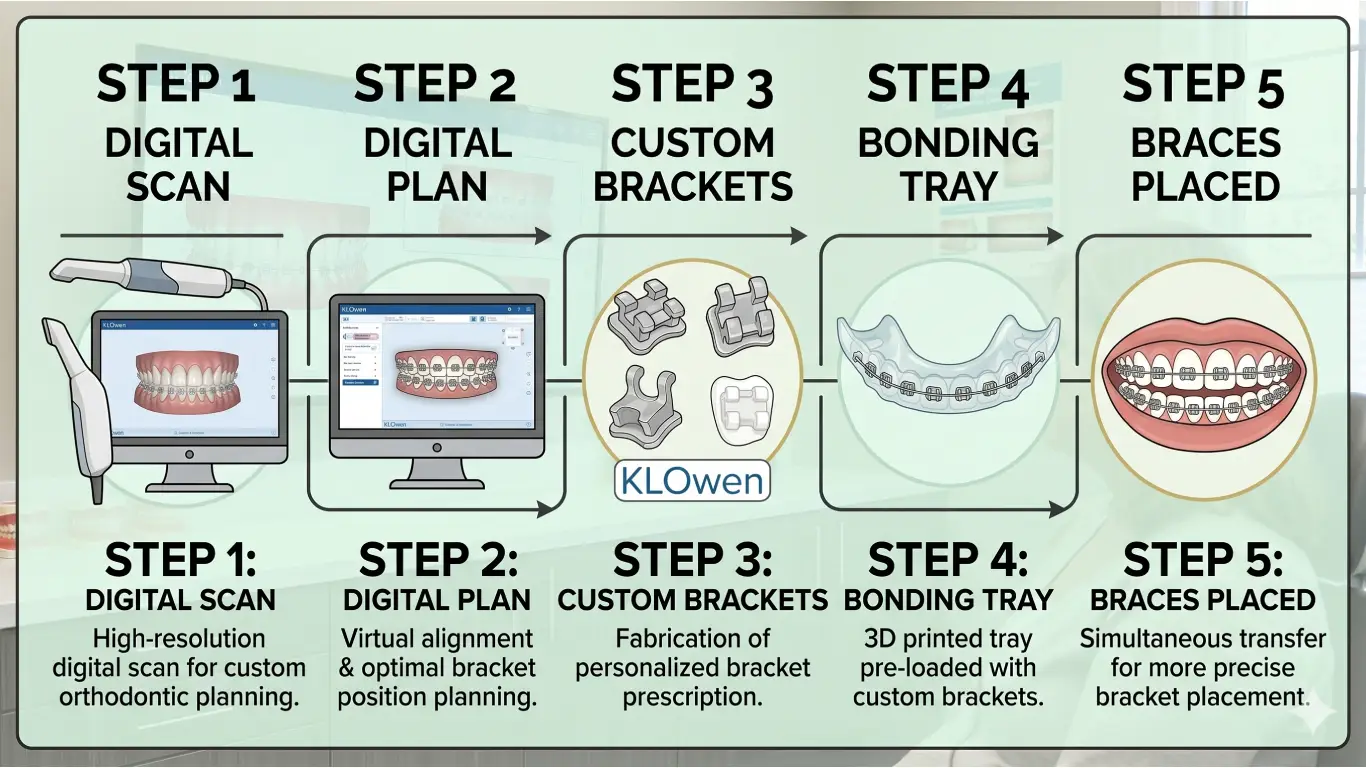
The exact process may vary depending on the patient and the clinic, but the general digital workflow for indirect bonding often follows these steps.
Step 1: Consultation and Orthodontic Records
The process starts with a consultation.
Your orthodontist checks your teeth, bite, jaw relationship, crowding, spacing, smile goals, and oral health. Records may include photos, X-rays, and a digital scan of your teeth.
This step matters because technology only works well when the diagnosis is correct.
A digital scan gives the orthodontist a detailed model of your teeth. Instead of using a traditional impression in some cases, the digital scan can help create a more comfortable and more accurate starting point for treatment planning.
Step 2: Digital Orthodontic Treatment Planning
Next, the orthodontist creates or reviews a digital treatment plan.
This is where digital orthodontic treatment planning becomes important. The orthodontist looks at how the teeth need to move and how the braces can help guide those movements.
The plan is not just about making teeth look straight from the front. A good orthodontic plan also considers bite, tooth roots, spacing, crowding, gum health, facial balance, and long-term stability.
Step 3: Digital Bracket Placement
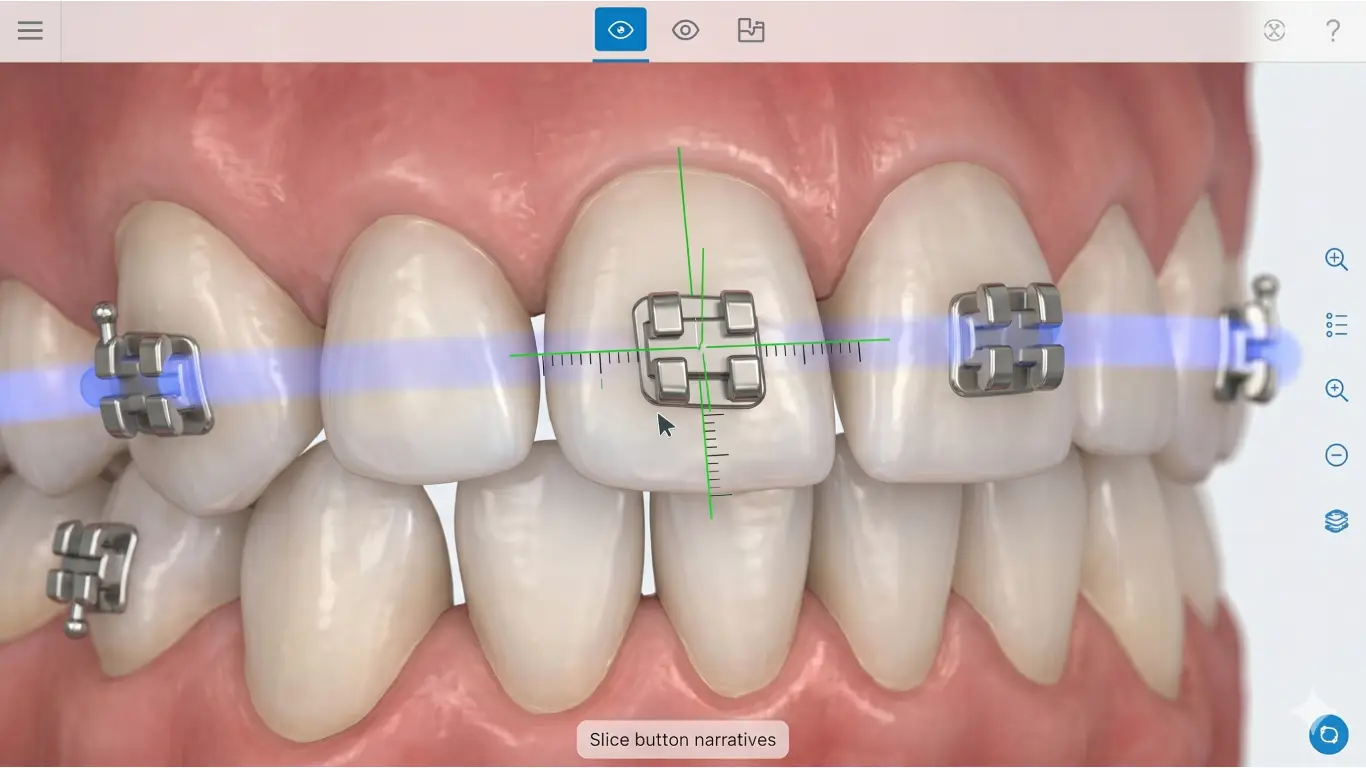
After the digital setup is reviewed, the orthodontist plans where the brackets should go on each tooth.
This is called digital bracket placement.
Small changes in bracket position can affect how the tooth moves. A bracket that is slightly too high, low, left, right, or tilted may change the way the wire expresses force on that tooth.
That is why bracket position is such a big part of braces treatment.
Digital bracket placement allows the orthodontist to think through those details before the bonding appointment.
Step 4: Custom Bracket and Prescription Planning
With KLOwen, the bracket setup can be customized for the patient.
A KLOwen custom bracket may be selected based on the tooth and the movement needed. The system can use different bracket features, such as bracket thickness, torque, and angulation, to better match the treatment plan.
This is why KLOwen is often described as a fully customized bracket system.
Instead of using the same standard bracket setup for everyone, the goal is to create a more personalized prescription for each tooth.
Step 5: 3D Printed Indirect Bonding Trays
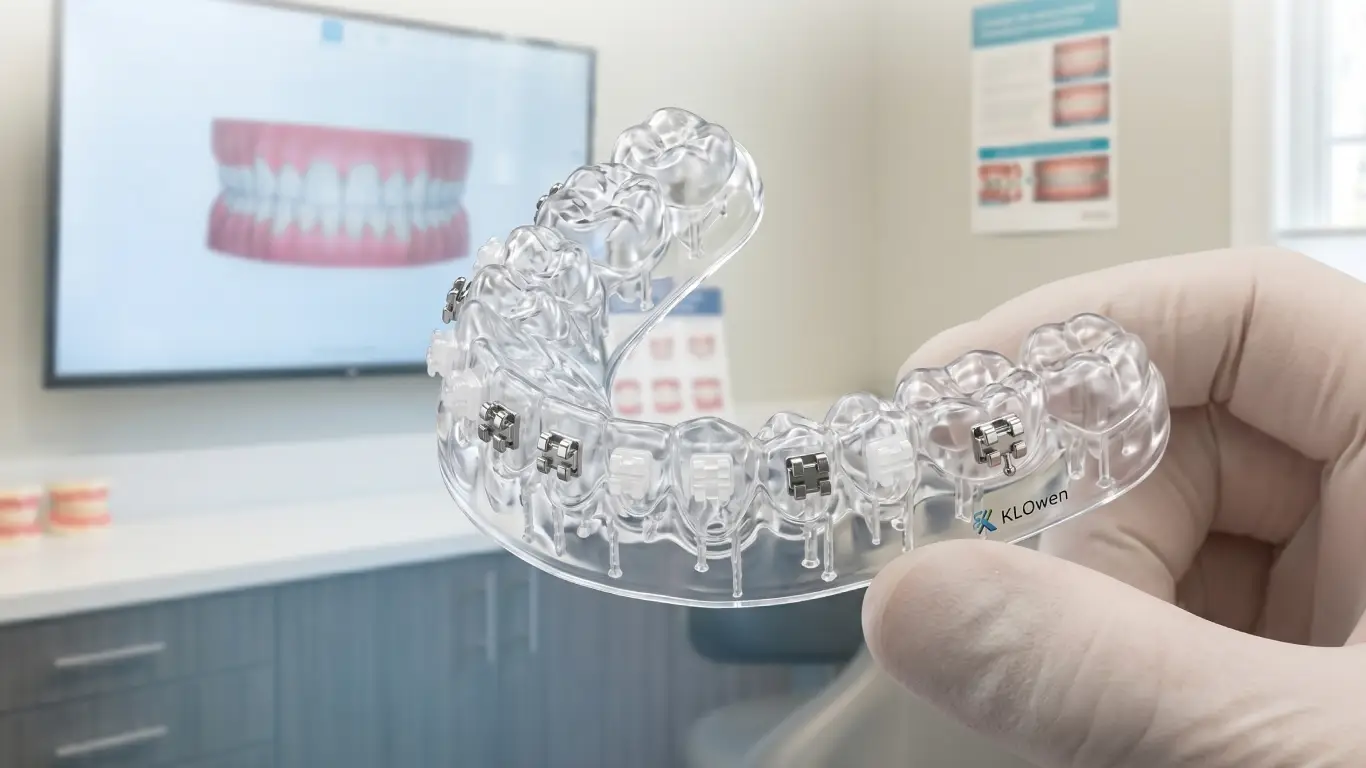
Once the setup is approved, a custom bonding tray is created.
This is one of the most important parts of the digital indirect bonding system. The tray is designed to hold the brackets in the planned positions and help transfer them to the teeth during the bonding appointment.
These are often called 3D printed indirect bonding trays.
The tray acts like a guide. It helps the orthodontic team place the brackets according to the digital plan.
Step 6: Bonding Appointment
At the bonding appointment, the teeth are prepared, the brackets are placed into the tray, and the tray is seated over the teeth.
The bonding material is cured, and the brackets attach to the teeth.
After the tray is removed, the brackets remain on the teeth in their planned positions.
For the patient, this appointment may feel more organized because much of the setup has already been prepared ahead of time.
Step 7: Adjustments and Monitoring
Even with custom braces and indirect bonding, treatment is not “set it and forget it.”
You still need regular orthodontic appointments. Your orthodontist still checks your bite, changes wires, monitors progress, and makes adjustments.
Braces treatment is a biological process. Teeth move through bone over time. That movement depends on your treatment plan, oral hygiene, elastics, appointment timing, and how your body responds.
What Makes KLOwen Different?
This section is a little more technical, but let’s keep it simple.
Traditional braces often use a standard bracket prescription. That means the bracket has built-in features designed to guide tooth movement in a general way.
KLOwen focuses more on custom bracket selection and custom prescription planning.
What Is Torque?
Torque is the way a bracket helps control the angle of the tooth root.
Think of a tooth like a tree. You do not only care about where the top of the tree is. You also care about the root direction. In orthodontics, root position matters for bite, smile appearance, stability, and gum health.
Custom torque can help the orthodontist plan how the tooth root should be guided.
What Is Angulation?
Angulation means the tilt or direction of the tooth.
For example, a front tooth may need to be uprighted, tipped slightly, or moved into a better angle. Bracket angulation can influence that movement.
Custom torque and angulation brackets may help the orthodontist build more of the intended tooth movement into the bracket setup from the start.
What Is Bracket Thickness?
Bracket thickness affects how far the bracket sits from the tooth surface.
Teeth are not flat. Each tooth has a different shape. Some teeth are more rounded, some are more rotated, and some are more crowded.
A custom bracket setup can help account for tooth shape and planned movement.
Why Does This Matter?
Braces work through the relationship between the bracket and the wire.
If the bracket prescription is more closely matched to the patient’s treatment plan, the orthodontist may need fewer manual corrections later. In some cases, that can support efficiency in indirect bonding and help reduce unnecessary bracket repositioning or wire adjustments.
But it is important to be honest:
Custom brackets do not guarantee faster treatment for every patient. They are one tool that may help improve planning and efficiency when used in the right case.
Why Accuracy Matters in Braces
Braces may look simple from the outside.
A bracket goes on each tooth. A wire connects the brackets. The teeth move.
But in reality, braces are very detailed.
Each bracket acts like a handle on the tooth. The wire connects to those handles and applies gentle force. If a bracket is not positioned ideally, the tooth may not move exactly as planned.
That can sometimes lead to:
Extra wire bends
Bracket repositioning
More finishing adjustments
Longer appointments
More refinement near the end of treatment
This is why the accuracy of indirect bonding matters.
With indirect bonding, the orthodontist can plan bracket placement in advance, often with better visibility on a digital model. Then the bonding tray helps transfer that plan to the teeth.
The goal is not perfection. The goal is better consistency.
A good indirect bonding process may help reduce chair time in orthodontics because the bracket setup is prepared before the appointment. It may also help the orthodontist start treatment from a more organized position.
What Does Research Say About Indirect Bonding?
Research on indirect bonding is promising, but it should be explained carefully.
Some studies suggest that indirect bonding can reduce chair time and improve efficiency during the bonding appointment. Some research also reports advantages in treatment workflow and bracket placement consistency.
At the same time, not every study shows a major difference in every outcome. Some reviews have found that direct and indirect bonding can have similar results in bracket placement accuracy or bond failure rates.
So the most trustworthy answer is:
Indirect bonding can be a helpful tool for planning, consistency, and chair-time efficiency, but it is not magic. The final result still depends on diagnosis, bracket placement approval, orthodontic skill, case complexity, patient cooperation, and follow-up care.
This is why patients should not choose a treatment only because it sounds “digital” or “custom.”
The better question is:
Does this system make sense for my teeth, my bite, and my treatment goals?
Is Indirect Bonding Better for Crowded Teeth?
Indirect bonding for crowded teeth may be helpful because crowded teeth can make bracket placement more challenging.
When teeth overlap, rotate, or sit at different angles, placing brackets directly in the mouth can sometimes be more difficult. A digital workflow allows the orthodontist to study the teeth in advance and plan bracket positions before the appointment.
That can be useful for crowded cases.
However, crowding is not all the same.
Mild crowding may be simple. Severe crowding may need extra space, expansion, extractions, bite correction, or other orthodontic planning.
Indirect bonding can support the process, but it does not replace a full diagnosis.
Is Indirect Bonding Helpful for Complex Cases?
Indirect bonding for complex cases may be helpful because complex orthodontic treatment usually requires careful planning.
Complex cases may include:
Severe crowding
Open bite
Crossbite
Impacted teeth
Missing teeth
Rotated teeth
Jaw growth concerns
Previous orthodontic relapse
Cases needing surgical orthodontics
In these cases, digital planning may help the orthodontist organize the treatment steps. A custom orthodontic bracket system may also help the orthodontist start with a more personalized bracket setup.
But again, the technology is only one part of the process.
Complex cases still require orthodontic experience, careful monitoring, and sometimes other treatment tools.
Benefits of Indirect Bonding for Patients
Patients usually do not care about every technical detail. They want to know:
Will this make my treatment easier?
Will it help my orthodontist plan better?
Will I spend less time in the chair?
Will it help my smile?
Here are the main patient-friendly benefits.
A More Planned Start
Indirect bonding moves much of the bracket planning before the bonding appointment.
That means your orthodontist can review your teeth, plan bracket positions, and approve the setup in advance.
Potentially Shorter Bonding Appointment
Because the brackets are transferred with a tray, the bonding appointment may be more efficient.
This does not mean every visit will be shorter. But the first bonding appointment may feel more streamlined.
More Consistent Bracket Placement
The tray helps transfer the planned bracket positions to the teeth.
This may reduce some of the guesswork that can happen when brackets are placed one by one directly in the mouth.
Helpful for Digital Orthodontic Workflows
Indirect bonding fits well with orthodontic digital workflows.
Digital scans, digital bracket placement, custom bracket selection, and 3D printed trays can all work together.
A More Customized Braces Option
For patients who want braces but also want modern planning, KLOwen custom braces may be an option worth asking about.
This can be especially interesting for patients who are comparing braces and Invisalign but may not be ideal candidates for clear aligners.
What Indirect Bonding Does Not Do
This section is important.
Indirect bonding has benefits, but it does not solve everything.
It Does Not Make Braces Invisible
KLOwen and indirect bonding are still connected to braces.
Depending on the bracket option used, the braces may be metal or clear, but they are still attached to the teeth.
If your main goal is a nearly invisible treatment option, you may also want to ask about Invisalign or clear aligners.
It Does Not Remove the Need for Adjustments
You still need orthodontic appointments.
Your orthodontist still needs to change wires, check movement, monitor your bite, and make adjustments.
It Does Not Guarantee Faster Treatment
Indirect bonding may improve efficiency in some parts of treatment, especially bonding and planning.
But total treatment time depends on many factors, including:
Case complexity
Tooth movement needed
Bite correction
Age
Biology
Elastics wear
Oral hygiene
Broken brackets
Missed appointments
It Does Not Replace the Orthodontist’s Skill
Digital planning is powerful, but it is not the doctor.
Your orthodontist still makes the clinical decisions.
It Does Not Replace Patient Cooperation
Braces still need care.
You still need to brush well, avoid foods that break brackets, wear elastics if prescribed, and attend your appointments.
Who May Be a Good Candidate for Indirect Bonding or KLOwen?
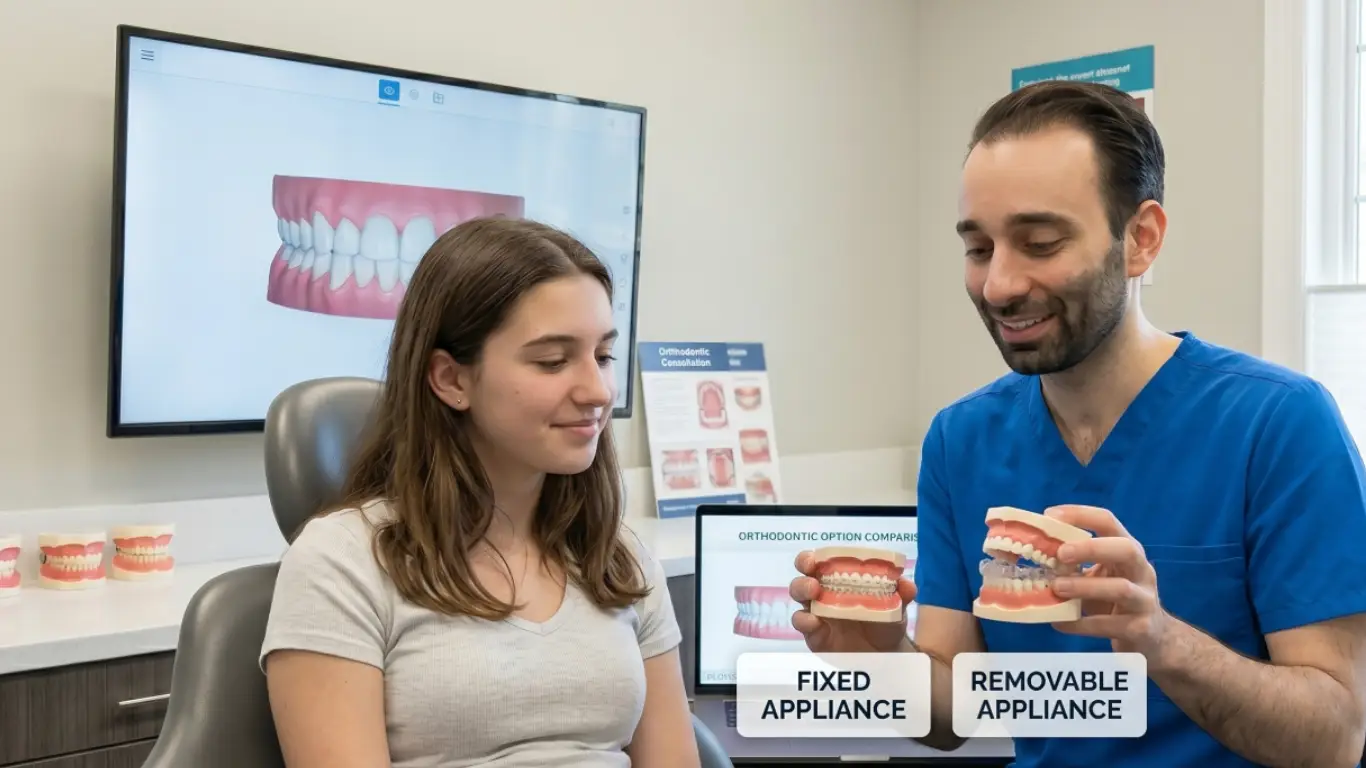
The best way to know is through an orthodontic consultation.
You may be a good candidate if:
You need braces
You have crowded teeth
You want a more customized braces option
You want a treatment plan supported by digital technology
You are comparing braces and clear aligners
You want your orthodontist to plan bracket placement digitally
You have a case where precise bracket planning may be useful
KLOwen may be considered for teens and adults, depending on the case.
However, not every patient needs the same system. Some patients may be better suited for:
Traditional metal braces
Invisalign
Other clear aligners
LightForce braces
Surgical orthodontics
The right choice depends on your teeth, your bite, your goals, and your orthodontist’s recommendation.
KLOwen vs Invisalign: Is One Better?
KLOwen and Invisalign are very different.
KLOwen is a custom braces system. The brackets are attached to the teeth, and wires help move the teeth.
Invisalign uses removable clear aligners. The aligners are worn over the teeth and changed during treatment.
One is not automatically better than the other.
KLOwen may be helpful if:
You need braces
You do not want to worry about removing aligners
Your orthodontist wants more fixed control
You have movements that may be better handled with braces
You want a customized braces option
Invisalign may be helpful if:
You want removable trays
You want a more discreet option
You can wear aligners as instructed
Your case is suitable for clear aligner treatment
You want fewer food restrictions
The real answer is case-specific.
At York Orthodontics, patients can ask about braces, Invisalign, KLOwen, and other orthodontic options during a consultation.
What We May See in Clinic
Many patients come in asking for the treatment they have already heard about.
Some ask for Invisalign because they want something removable and discreet.
Some ask for braces because they want a fixed option that they do not need to remember to wear.
Some parents ask what will be easiest for their teen.
Some adults want the most efficient and predictable option for their case.
The best answer usually starts with diagnosis, not the product name.
A patient with mild spacing may have different options than a patient with severe crowding. A teen with a deep bite may need a different plan than an adult with previous orthodontic relapse.
That is why indirect bonding and KLOwen should be explained as part of a bigger treatment conversation.
The question is not only:
“Is KLOwen good?”
The better question is:
“Is KLOwen the right tool for this specific smile?”
Questions to Ask Your Orthodontist
Before starting treatment, ask clear questions.
Here are some helpful ones:
Is indirect bonding right for my case?
Do I need regular braces, custom braces, or clear aligners?
How does KLOwen change the planning process?
Will custom brackets affect my treatment time?
How will you decide bracket position?
What happens if a bracket comes loose?
How often will I need appointments?
Will I need elastics?
How should I brush around braces?
What foods should I avoid?
What happens after braces come off?
Will I need retainers?
These questions help you understand the treatment, not just the technology.
How Much Do KLOwen Custom Braces Cost vs. Traditional Braces?
Feature | Traditional Braces | KLOwen Custom Braces |
|---|---|---|
General Cost Range | $3,000 - $7,000 | $4,000 - $8,000+ |
Upfront Laboratory Fees | Lower (uses standard stock brackets) | Slightly higher (includes 3D-printed custom trays) |
In-Office Appointments | Standard number of adjustment visits | 35% to 45% fewer visits (saves ~7 total appointments) |
Average Treatment Speed | Standard biological movement timeline | 20% to 40% faster due to precision slot-filling wires |
Emergency Risk | Moderate (more manual wire bending required) | Lower (digital planning reduces bracket repositioning ) |
Payment Options | Flexible monthly payment plans available at the York Orthodontics | Flexible monthly payment plans available at the York Orthodontics |
FAQ: Indirect Bonding and KLOwen Custom Braces
Indirect bonding is an advanced braces placement method where an orthodontist pre-plans exact bracket positions virtually before your appointment. Instead of placing brackets one by one directly on the enamel, the entire custom bracket configuration is transferred to the teeth simultaneously using a 3D-printed custom transfer tray.
Traditional braces utilize generic, stock bracket shapes positioned entirely by hand during your appointment. KLOwen is a fully customized digital orthodontic solution that uses a specialized software library of 41 distinct premade bracket shapes. This software reverse-engineers a precise, custom prescription tailored to the exact torque, angulation, and thickness needed for every individual tooth.
Yes, clinical data indicates that KLOwen's custom digital system can reduce total treatment time by 20% to 40%. By utilizing a proprietary 19.5 slot size paired with precision 19x25 size archwires, the wire completely fills the bracket slot from day one. This precise fit delivers optimal, controlled forces that eliminate the need for frequent manual wire bending or mid-treatment bracket repositioning.
Yes. Multi-practice clinical studies show that the KLOwen custom prescription system yields an average 35% to 45% reduction in standard in-office appointments. Because the final teeth alignments are digitally engineered into the hardware layout from the start, patients complete their comprehensive treatment plans with an average of 7 fewer adjustment visits.
In the Toronto and Ontario regions, traditional metal braces generally range from $3,000 to $7,000, while KLOwen custom braces typically range from $4,000 to $8,000+. While the advanced digital 3D-planning software and custom transfer trays can mean a slightly higher upfront material investment, the final cost is highly comparable to traditional options because it reduces total clinical labor and appointment overhead.
Neither system is universally superior; they fulfill different lifestyle preferences and clinical diagnoses. KLOwen provides the fixed, continuous control of a comprehensive braces system but upgrades it with custom digital planning and 3D printing. Invisalign offers a removable, highly discreet alternative utilizing transparent trays. The ideal option depends on your specific bite mechanics, teeth crowding, and compliance goals.
The best way to determine your candidacy is to schedule a comprehensive orthodontic consultation. Your orthodontist will capture high-resolution digital intraoral scans, evaluate your jaw relationships, and formulate a targeted treatment plan to establish whether KLOwen custom braces, clear ceramic brackets, or Invisalign aligners best suit your long-term smile goals.
Final Thoughts: A More Planned Way to Start Braces
Indirect Bonding is not just a small technical detail. It changes how braces can be planned and placed.
Instead of placing every bracket directly on the teeth during the appointment, the orthodontist can plan the bracket positions in advance and use a custom tray to help transfer that plan to the teeth.
With KLOwen, this process becomes even more customized. The system combines digital orthodontic treatment planning, custom orthodontic brackets, prescription custom brackets, and 3D printed indirect bonding trays.
For patients, the main benefit is simple:
Your braces can start with a more planned and personalized setup.
But the most important part is still the orthodontist’s diagnosis and treatment plan. Technology can support great orthodontic care, but it does not replace experience, judgment, and patient cooperation.
If you are considering braces and want to know whether indirect bonding, KLOwen custom braces, Invisalign, or another orthodontic option is right for your smile, York Orthodontics can help you compare your choices during a consultation.
York Orthodontics offers orthodontic care in Thornhill and North York, with treatment options for children, teens, and adults.
Book a consultation with York Orthodontics to learn which treatment option is the best fit for your teeth, your bite, and your smile goals.