

LightForce vs Invisalign: Which One Should You Choose?
Choosing between LightForce and Invisalign often comes down to one question: Do you want removable clear aligners, or fixed braces customized for your teeth?
Invisalign may be a better fit if you want a discreet, removable treatment and can wear your aligners consistently. LightForce may suit patients who prefer fixed treatment, need more complex tooth movements, or do not want treatment success to depend heavily on remembering to wear aligners. However, an orthodontic assessment is necessary because the right option depends on your bite, tooth position, lifestyle, and treatment goals.
Quick Answer: Is LightForce or Invisalign Better?
Neither treatment is automatically better for everyone. Invisalign uses removable clear aligners, while LightForce uses custom 3D-printed brackets attached to the teeth. Invisalign offers more freedom for eating and brushing, but requires disciplined daily wear. LightForce works continuously and gives the orthodontist direct control, which can be useful for patients with complex movements or inconsistent aligner habits.
What Are LightForce Braces?
LightForce orthodontics is a digitally planned fixed-braces system. Instead of using standard brackets designed for average tooth shapes, the orthodontist creates a digital treatment plan and LightForce manufactures brackets for the individual patient.
The process normally includes:
A digital scan and complete orthodontic records
A virtual setup of the planned tooth positions
Review and adjustment of the plan by the orthodontist
Custom 3D printing of each bracket
Placement using indirect bonding trays
LightForce describes its brackets as patient-specific appliances created from the person’s tooth anatomy and the doctor’s treatment plan. The system’s defining feature is customization, not simply the colour of the brackets. LightForce’s official technology overview explains this scan, plan, and print workflow.
If you want to understand each step in more detail, read how a LightForce treatment plan is create.
What Is Invisalign?
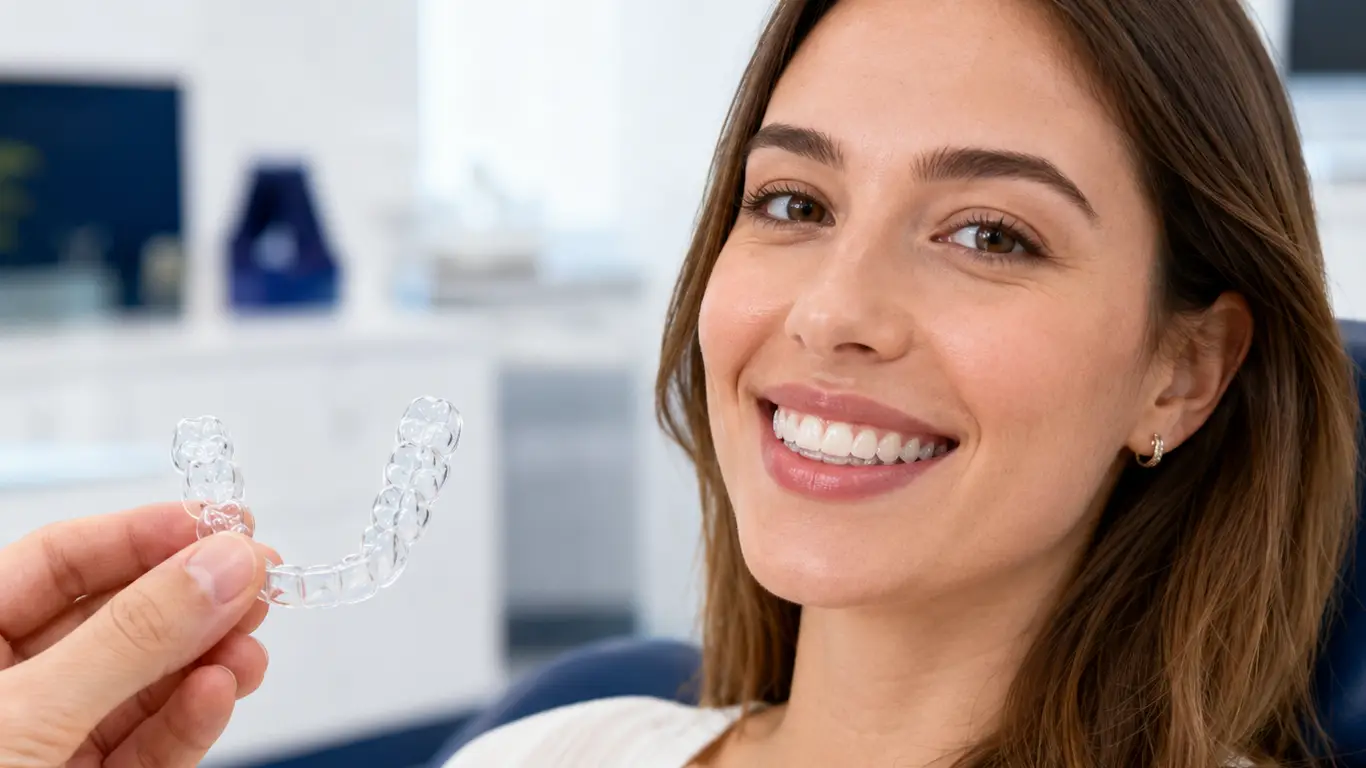
Invisalign is a clear-aligner treatment system. Instead of brackets and wires, patients receive a sequence of transparent plastic aligners designed to move their teeth gradually.
The aligners are removable, but they are not part-time appliances. Invisalign states that patients generally need to wear them for approximately 20 to 22 hours per day. They should normally be removed for meals and oral hygiene.
Each new aligner continues the planned movement. Some patients may also need small tooth-coloured attachments, elastics, or additional sets of aligners called refinements.
Invisalign can treat many types of crowding, spacing, and bite problems, but its suitability depends on the movements required and the patient’s ability to follow the wear schedule. York Orthodontics provides personalized Invisalign treatment under the supervision of Dr. Nima Mir.
LightForce vs Invisalign Comparison
Factor | LightForce | Invisalign |
|---|---|---|
Appliance | Fixed custom brackets and wires | Removable clear aligners |
Visibility | Tooth-coloured, but still visible | Usually less noticeable |
Patient compliance | Works continuously once placed | Must be worn 20 to 22 hours daily |
Eating | Some food restrictions | Removed for meals |
Cleaning | Requires careful cleaning around brackets | Easier access for brushing and flossing |
Complex movements | Fixed control may be helpful | Depends on the case and planned movements |
Customization | Brackets are designed for individual teeth | Aligners are made for the individual treatment sequence |
Risk of loss | Cannot be misplaced by the patient | Aligners can be lost or forgotten |
Lifestyle | No removal routine | More flexibility, but more responsibility |
Best choice | Depends on clinical needs and habits | Depends on clinical needs and habits |
LightForce vs Invisalign for Appearance
Invisalign is generally the less noticeable option because the aligners are transparent and do not use visible wires. Attachments may still be seen at close range, especially if several are needed.
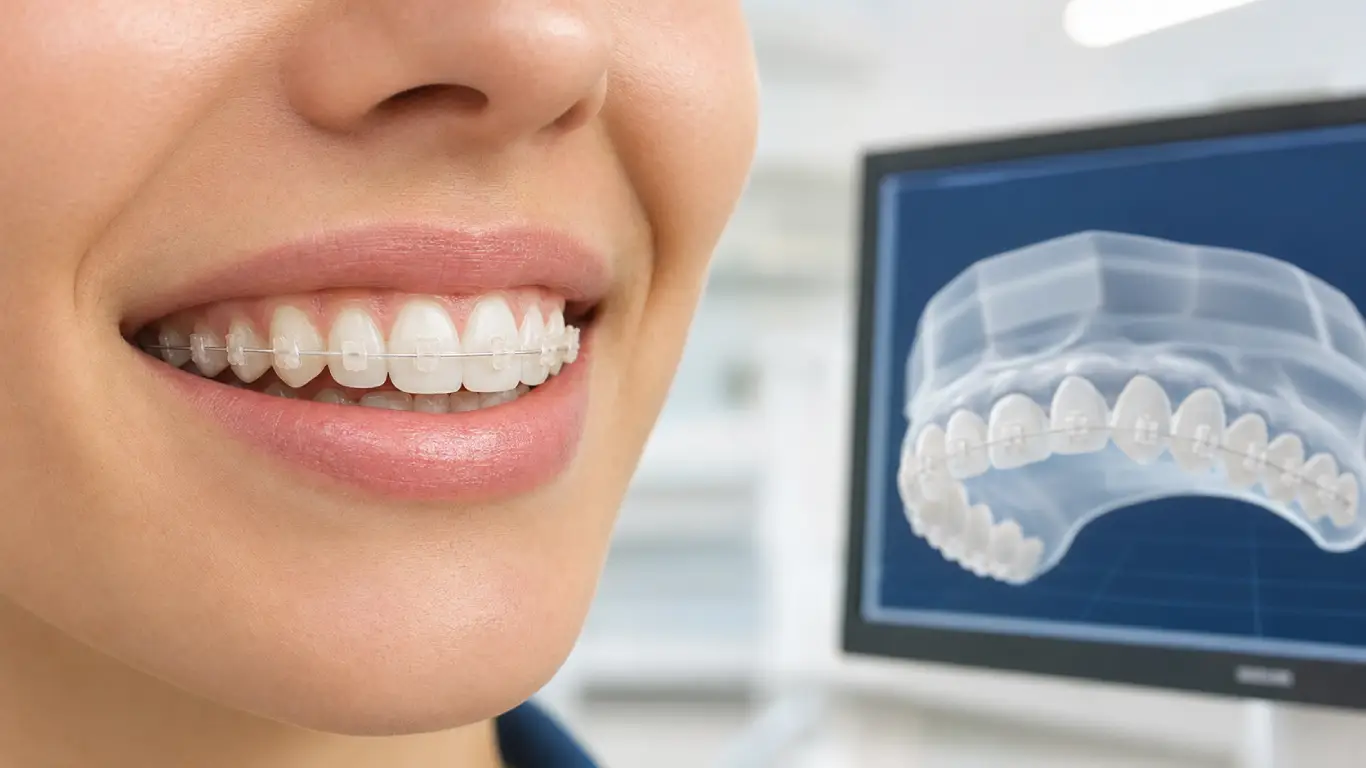
LightForce brackets are often tooth-coloured and less visually prominent than traditional metal brackets. However, they remain fixed braces, and the archwire is visible.
Are LightForce Braces Less Noticeable Than Metal Braces?
Usually, yes. Their lighter, tooth-coloured appearance can blend with the teeth better than metal brackets. However, LightForce should not be described as invisible.
If appearance is your highest priority, Invisalign may have the advantage. If you want a less noticeable alternative to metal braces without managing removable aligners, LightForce may offer a useful middle ground.
Which Treatment Is More Comfortable?
Both treatments can cause pressure or temporary soreness because both are moving teeth.
Invisalign has no metal brackets or archwire, which may reduce irritation to the lips and cheeks. However, the aligner edges or tooth attachments can still cause short-term irritation, especially during the first few days.
LightForce brackets are customized to the patient’s teeth, but they are still fixed appliances. The cheeks and lips may need time to adjust. Patients may also feel soreness after certain wire changes.
It is more accurate to say that the treatments create different comfort experiences, rather than claiming that one is painless.
Eating with LightForce vs Clear Aligners
With Invisalign, patients remove their aligners before eating. This means there are generally fewer food restrictions. The challenge is remembering to put the aligners back in and maintaining the recommended daily wear time.
With LightForce, the brackets remain attached while eating. Patients need to avoid foods that could damage brackets or wires, including very hard, sticky, or chewy foods.
Consider your real habits:
Choose Invisalign only if you are willing to remove, store, clean, and reinsert the aligners consistently.
Consider LightForce if you would rather accept food restrictions than manage aligners throughout the day.
Brushing and Oral Hygiene
Invisalign allows patients to remove their aligners for brushing and flossing. This provides easier access to the tooth surfaces, but both the teeth and aligners must be kept clean. Putting aligners over unclean teeth may trap food particles and plaque.
LightForce requires more detailed brushing around the brackets and under the wire. Floss threaders, interdental brushes, or a water flosser may be recommended as part of the cleaning routine.
Neither system removes the need for excellent oral hygiene and regular dental checkups.
Compliance: One of the Most Important Differences
Compliance is a major factor in the LightForce vs Invisalign decision.
LightForce is fixed to the teeth and works continuously. Patients still need to attend appointments, maintain good oral hygiene, wear elastics if prescribed, and avoid damaging the appliance.
Invisalign adds another responsibility: wearing the aligners for 20 to 22 hours per day. Leaving them out for long periods can interrupt the planned movement. This may cause an aligner to fit poorly and could extend treatment or require refinements.
Invisalign may work very well for disciplined patients. Fixed braces may be more practical for children, teens, or adults who expect that consistent aligner wear will be difficult.
Which Option Is Better for Complex Tooth Movements?
Both systems can address a wide range of orthodontic problems when used by an experienced orthodontist. However, certain complex movements may be easier to manage with a fixed appliance.
LightForce gives the orthodontist a customized fixed-braces system that does not depend on daily aligner wear. This may be valuable for severe rotations, significant crowding, difficult vertical movements, or more involved bite corrections.
Invisalign has expanded far beyond simple cosmetic straightening. It may be suitable for many moderate and some complex cases, sometimes with attachments, elastics, or other appliances. Still, not every movement is equally predictable with aligners.
The diagnosis matters more than the brand. Your orthodontist must evaluate your teeth, jaw relationship, roots, gums, and bite before recommending either optio
LightForce vs Traditional Braces
Traditional braces use standardized brackets. The orthodontist selects and positions those brackets, then adjusts the wires and mechanics throughout treatment.
LightForce starts with a digital setup. The brackets are generated for the patient’s individual tooth anatomy and the orthodontist’s planned movements.
This does not mean that conventional braces are outdated or ineffective. Traditional braces remain a reliable treatment used successfully in a wide range of cases. LightForce changes the planning and customization workflow, but the orthodontist’s diagnosis, decisions, monitoring, and adjustments remain essential.
For another explanation of the system’s potential benefits, see five reasons patients consider LightForce braces.
Does LightForce or Invisalign Work Faster?
There is no responsible way to promise that one system will always be faster.
Treatment duration can be affected by:
The severity of crowding or spacing
The type of bite correction required
Whether teeth need to be removed
Growth and jaw development
Aligner wear and elastic use
Missed appointments
Broken appliances or lost aligners
Biological response to tooth movement
Digital planning may help the orthodontist organize treatment efficiently, but it does not guarantee a specific completion date. Ask for an individualized estimate after your records and bite have been assessed.
How Much Does Invisalign Cost vs Traditional Braces or LightForce?
influenced by the complexity of treatment, estimated duration, required appliances, number of aligners or refinements, and what is included in the quoted fee.
When comparing estimates, ask whether the price includes:
Diagnostic records and digital scans
All regular orthodontic appointments
Replacement brackets or aligners
Invisalign refinements
Emergency visits
Retainers after active treatment
Follow-up appointments after treatment
Do not choose solely by the advertised starting price. Two quotes may cover very different services.
York Orthodontics discusses treatment costs after evaluating the patient and offers free consultations and flexible payment options. You can also review its current information about Invisalign cost and braces pricing and payment plans.
LightForce vs Invisalign: Which One Should You Choose?
LightForce may be worth considering if:
You want fixed treatment that works continuously.
You may forget or remove aligners too often.
Your case requires movements that may benefit from fixed mechanics.
You prefer tooth-coloured brackets over traditional metal braces.
You value digitally planned, patient-specific brackets.
Invisalign may be worth considering if:
You want the least noticeable option.
You want to remove your appliance for meals and brushing.
You can wear aligners for 20 to 22 hours every day.
You are comfortable keeping track of removable trays.
Your orthodontist confirms that aligners can perform the movements you need.
Some patients may be suitable candidates for both. In those situations, daily habits, appearance preferences, cost, and treatment responsibilities can guide the final decision.
How to Find the Best Custom Braces Orthodontist
Being a LightForce certified orthodontist or provider confirms access to the system, but it should not be the only selection criterion.
When comparing orthodontists, ask:
Why do you recommend LightForce or Invisalign for my specific bite?
Which movements may be challenging in my case?
Who creates and approves my digital treatment plan?
What happens if treatment does not progress as expected?
What is included in the total fee?
How often will my progress be evaluated by the orthodontist?
A good orthodontist should explain both the benefits and limitations of each option. Be cautious of anyone who promises perfect results, guarantees unusually fast treatment, or recommends a product without first completing a proper assessment.
Get a Personalized LightForce vs Invisalign Assessment
Reading a comparison can help you prepare, but it cannot show how your roots, jaw relationship, gum health, or bite will respond.
York Orthodontics, led by Dr. Nima Mir, provides orthodontic care at its North York and Thornhill locations. During a free consultation, the team can evaluate your needs, explain whether LightForce, Invisalign, or another treatment is appropriate, and provide an individualized cost estimate. Flexible, interest-free payment options are also available.
Book a free orthodontic consultation to compare your options based on your actual smile, not general assumptions.
Frequently Asked Questions
A switch may be possible, but it is a clinical and financial decision. Your orthodontist would need to reassess the remaining tooth movements, create a new plan, and explain any additional fees or timeline changes.
Yes. Teeth can shift after any form of orthodontic treatment. Patients generally need retainers after LightForce, Invisalign, or traditional braces to help maintain the final positions.
Suitability depends on dental development, treatment needs, and behaviour. Invisalign requires reliable aligner wear, while fixed braces remove that responsibility. An orthodontic assessment can determine which option is more practical.
Contact your orthodontic office instead of guessing which tray to wear. Depending on your progress, the orthodontist may advise wearing the previous aligner, moving forward, or ordering a replacement.
The brackets are designed to be tooth-coloured, but foods, drinks, plaque, and the elastic ties used with braces may affect appearance. Following the orthodontist’s cleaning and dietary guidance can help keep the appliance looking cleaner.