

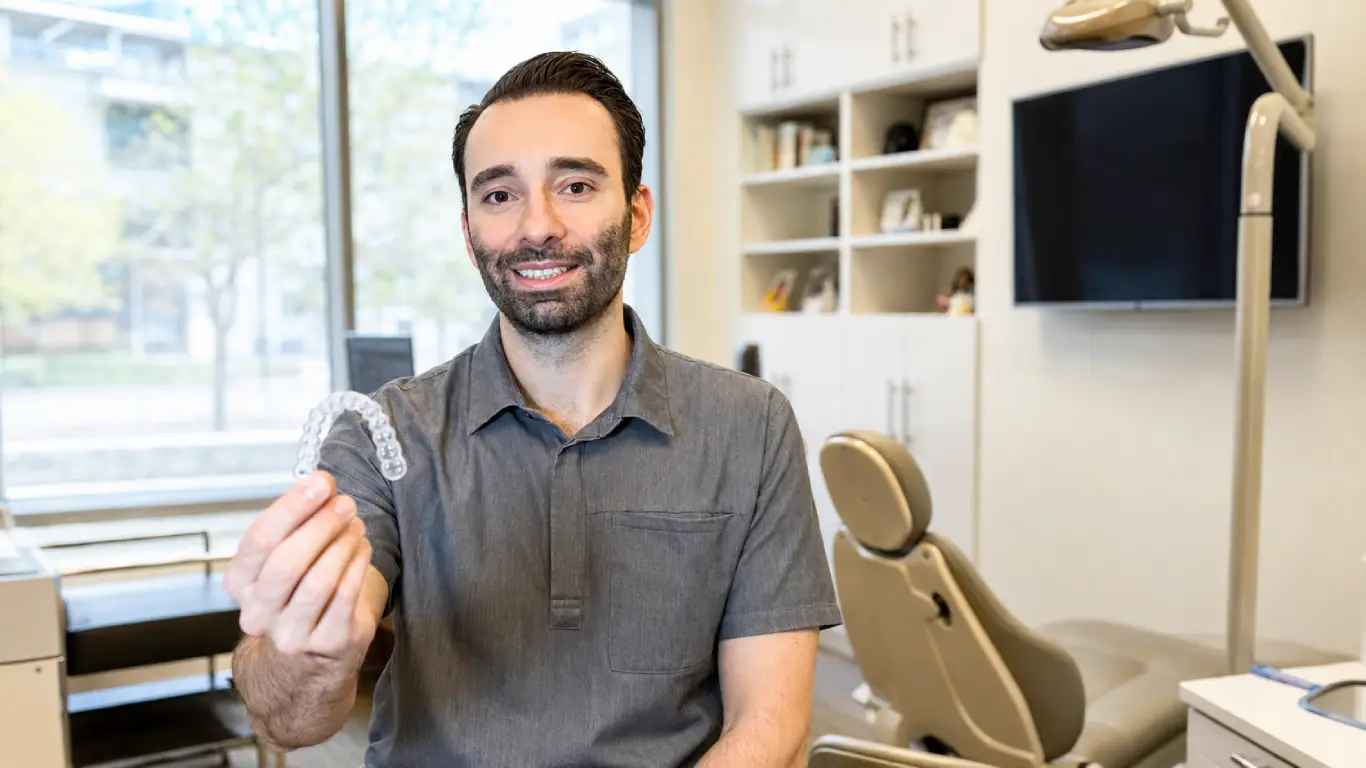
Invisalign Cost in Toronto, North York & Thornhill

If you are wondering how much does Invisalign cost, you are in the right place. In 2026, the average Invisalign cost in Toronto and Ontario generally ranges from $3,000 to $8,000+ depending on your specific smile.

At York Orthodontics, we believe in 100% transparent pricing with no hidden fees. We offer flexible 0% interest payment plans to make your dream smile a reality.

Important Note

The final cost of your treatment depends on a personalized orthodontic consultation

Invisalign treatment cost

Quick Invisalign Cost Snapshot

Invisalign Case Type

Estimated 2026 Cost

Mild Cases

CAD $3,500–$5,500

Moderate Cases

CAD $5,500–$7,500

Complex Cases

CAD $7,500–$8,500+

Without Insurance

Usually paid out of pocket

With Insurance

Many plans cover up to 50% of your Invisalign aligners cost

Payment Options

We offer flexible payment plans with 0% interest to spread the cost over time.

Invisalign Cost

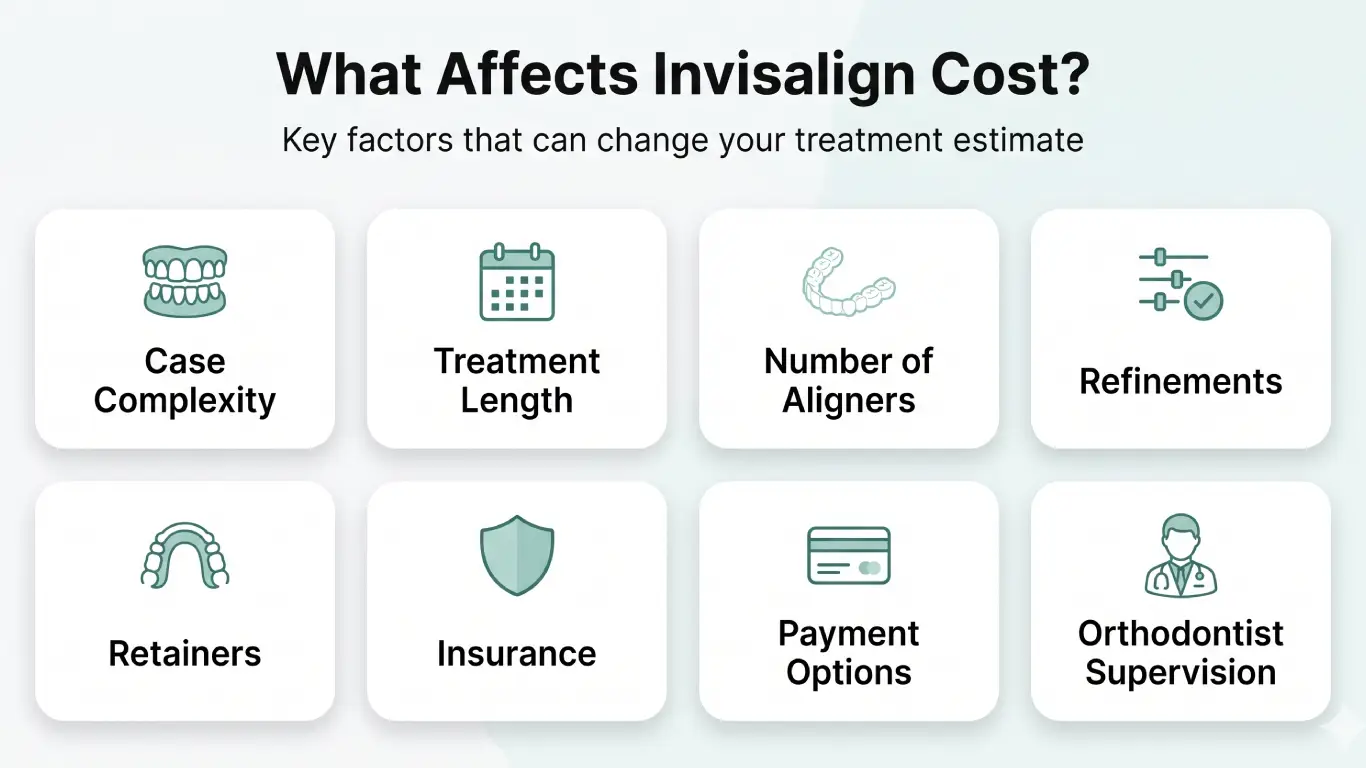
What Affects Invisalign Cost?

Your Invisalign aligners cost can change based on:

  • Case complexity: Mild spacing usually costs less than complex bite correction.
  • Treatment length: Longer treatment usually means more aligners and visits.
  • Number of aligners: More aligners can increase the total cost.
  • Refinements: Some patients need extra aligners near the end of treatment.
  • Retainers: Ask whether retainers are included after treatment.
  • Insurance: Some plans may cover part of orthodontic treatment.
  • Payment options: Monthly payments may make treatment easier to manage.
  • Orthodontist supervision: Invisalign is not just trays; planning and monitoring matter.
What Affects Invisalign Cost?

Cost of Invisalign Treatment: Smart Ways to Save

  1. Flexible Payment Plans: At York Orthodontics, we offer various flexible payment options to make your treatment more affordable. These include monthly installments that fit your budget, so you don’t have to pay the full amount upfront.
  2. Insurance Utilization: Check your dental insurance policy, as many plans cover up to 50% of Invisalign treatment costs. Contact your insurance provider to understand your coverage and maximize your benefits.
  3. Flexible Spending Account (FSA): Use pre-tax dollars from your FSA to pay for Invisalign treatment. This can significantly lower your out-of-pocket costs.
  4. Special Promotions and Discounts: Look out for special deals and discounts at York Orthodontics. We occasionally offer promotions that can help reduce your treatment costs.
  5. Interest-Free Financing: Consider interest-free financing options. Some credit cards offer no interest for a certain period, or you might qualify for a low-interest loan specifically for medical treatments.
  6. Free Consultations: Take advantage of free consultation offers. This helps you understand the treatment plan and costs involved without any initial financial commitment.
  7. Tax Deductions: In some cases, orthodontic treatment costs can be tax-deductible if they exceed a certain percentage of your income. Check with a tax advisor to see if you qualify for any tax benefits.
  8. Bundling Services: If you or a family member need multiple orthodontic treatments, ask about bundling services. Sometimes, orthodontists offer discounts if you commit to a package of treatments.
  9. Loyalty Programs: At York Orthodontics, we offer a loyalty plan and referral bonuses. By referring a friend or family member, you can take advantage of discounts on your treatment cost.
  10. Review Payment Policies: At York Orthodontics, we offer a discount if you pay the full amount upfront. If you can afford it, this can be a great way to save money in the long run.

By using these tips and taking advantage of the flexible payment options at York Orthodontics, you can make your Invisalign treatment costs more affordable and manageable.

Insurance

Many dental insurance plans cover Invisalign aligner costs, just as they would other orthodontic treatments like metal braces or orthodontic surgery. You might be surprised to learn that some insurance plans may even cover the entire cost of Invisalign treatment. You can speak with your orthodontist or your insurance provider to learn more about your coverage. This could be a great option for receiving Invisalign treatment without the burden of a large payment at the end of your treatment.

Invisalign Insurance

FSA, or Flexible Spending Account

You can put your FSA (Flexible Spending Account) for Invisalign treatment. You’ll need to set aside approximately $2,000 to $2,500 of your pre-tax dollars through your aside Flexible Spending Account. These funds can help you cover much of the cost of Invisalign treatment. You can then apply for Flexible Spending Account reimbursement.

FSA, or Flexible Spending Account for Invisalign cost

How much Does Invisalign Cost in Ontario?

According to thedentistryblog.com, the average cost of Invisalign in different areas is:

  • Urban: $4,500–$8,000
  • Suburban: $3,000–$8,500
  • Rural: $3,000–$7,500

Please be aware that the prices above represent the average cost of Invisalign for adults in Toronto.

How much Does Invisalign Cost in Ontario?

Invisalign Cost vs. Braces Cost

The average cost is:

Invisalign Cost vs. Braces Cost
average cost of Invisalign

What Is Included in Invisalign Cost?

Not every Invisalign quote includes the same things. Before comparing prices, make sure you understand what is included in the treatment fee.

Your Invisalign cost may include:

  • Consultation
  • Digital scans or records
  • Orthodontic treatment planning
  • Invisalign aligners
  • Attachments if needed
  • Progress visits
  • Refinements
  • Retainers
  • Post-treatment follow-up

Affordable Orthodontic Care in North York & Thornhill

Achieving your dream smile shouldn’t come with financial stress. At York Orthodontics, we make your clear aligner or braces treatment entirely stress-free with custom financial options built around your lifestyle:

  • 0% Interest Financing: Spread your treatment cost into low, manageable monthly installments.

  • Flexible Down Payments: Start your journey with an upfront amount that fits your budget.

  • Two Convenient GTA Clinics: Visit our expert team on the border of North York or right in Thornhill without the downtown commute.

Stop guessing what your orthodontic treatment prices will look like. Take the first step toward a healthy, confident smile completely risk-free.

What Patients Say About York Orthodontics

flexible payment calculator

math.pow

$6000
$5000$10000
The cost of Invisalign treatment is similar to that of traditional braces.
$2000
$50$10000
Lower your monthly cost by making a down payment.
0%
0%10%
We offer 0% interest payment plans
24Month
6Month48Month
24 month term is the most popular option.

Total Summary

$

$

$

$

$

$

FAQ

How much does Invisalign cost in Toronto?

In Toronto, the cost typically ranges from $3,000 to $8,000 depending on case complexity, treatment length, and the provider's experience.

How much is Invisalign in Ontario?

Across Ontario, patients generally pay between $3,000 and $8,500. Urban and suburban pricing is largely similar, dictated mostly by the severity of the bite correction.

Is Invisalign painful?

Invisalign is generally not painful, but you may experience mild discomfort or pressure when switching to a new set of aligners. This usually lasts for a few days and is a sign that the aligners are working to shift your teeth.

How much does Invisalign cost without insurance?

Without insurance, patients pay the full out-of-pocket fee ranging from $3,000 to $8,000. However, our 0% interest monthly payment plans can break this down to highly manageable installments.

Is Invisalign more expensive than braces?

Invisalign and traditional braces are highly comparable in price. Braces generally range from $3,000 to $7,000, while Invisalign ranges from $3,000 to $8,000.

Are payment plans available for Invisalign?

Yes, York Orthodontics offers highly flexible, 0% interest payment plans to help fit treatment into your monthly budget.

Is Invisalign cheaper for minor cases?

Yes. Minor spacing or slight relapse from past orthodontic work requires fewer aligners and shorter timeframes, making it significantly less expensive.