

Clear Aligner Technology
Clear aligner technology uses a series of custom, removable trays to guide teeth into a planned position over time. It is a popular option for people who want a less visible alternative to braces, but whether it is the right choice depends on the bite problem, the complexity of the case, and how consistently the aligners are worn. For some patients, clear aligners can be a strong fit; for others, braces or a different orthodontic approach may still be more practical.
What clear aligner technology is
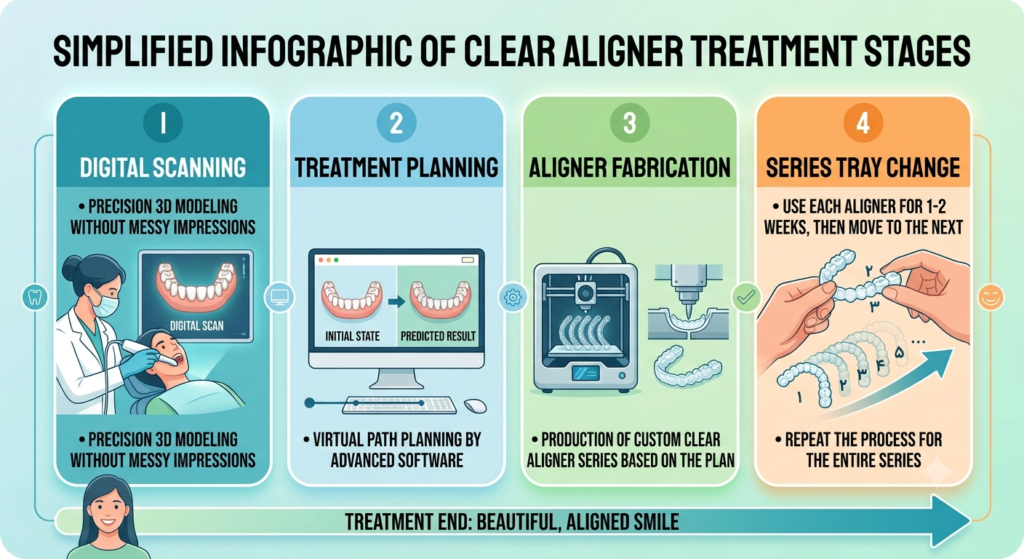
Clear aligner technology is a digital orthodontic treatment process that typically begins with scans or impressions, followed by treatment planning software that maps out tooth movement step by step. The aligners are then fabricated to match those stages, so each new tray applies slightly different pressure than the one before.
Unlike fixed braces, aligners are removable, which makes eating and brushing easier for many patients. That convenience also means success depends heavily on wearing them as directed, because the trays can only move teeth when they are actually in the mouth.
How it works
The basic idea is simple, even if the software behind it is sophisticated. A scan or digital model is used to plan tooth movement, a series of custom trays is created, and each tray is worn for a set period before moving to the next one.
In many cases, aligners are designed to be worn for about 20 to 22 hours per day, with removal mainly for meals, drinks other than water, and brushing. If the trays are worn less than recommended, treatment may take longer or may not track as planned.
Types of aligner systems
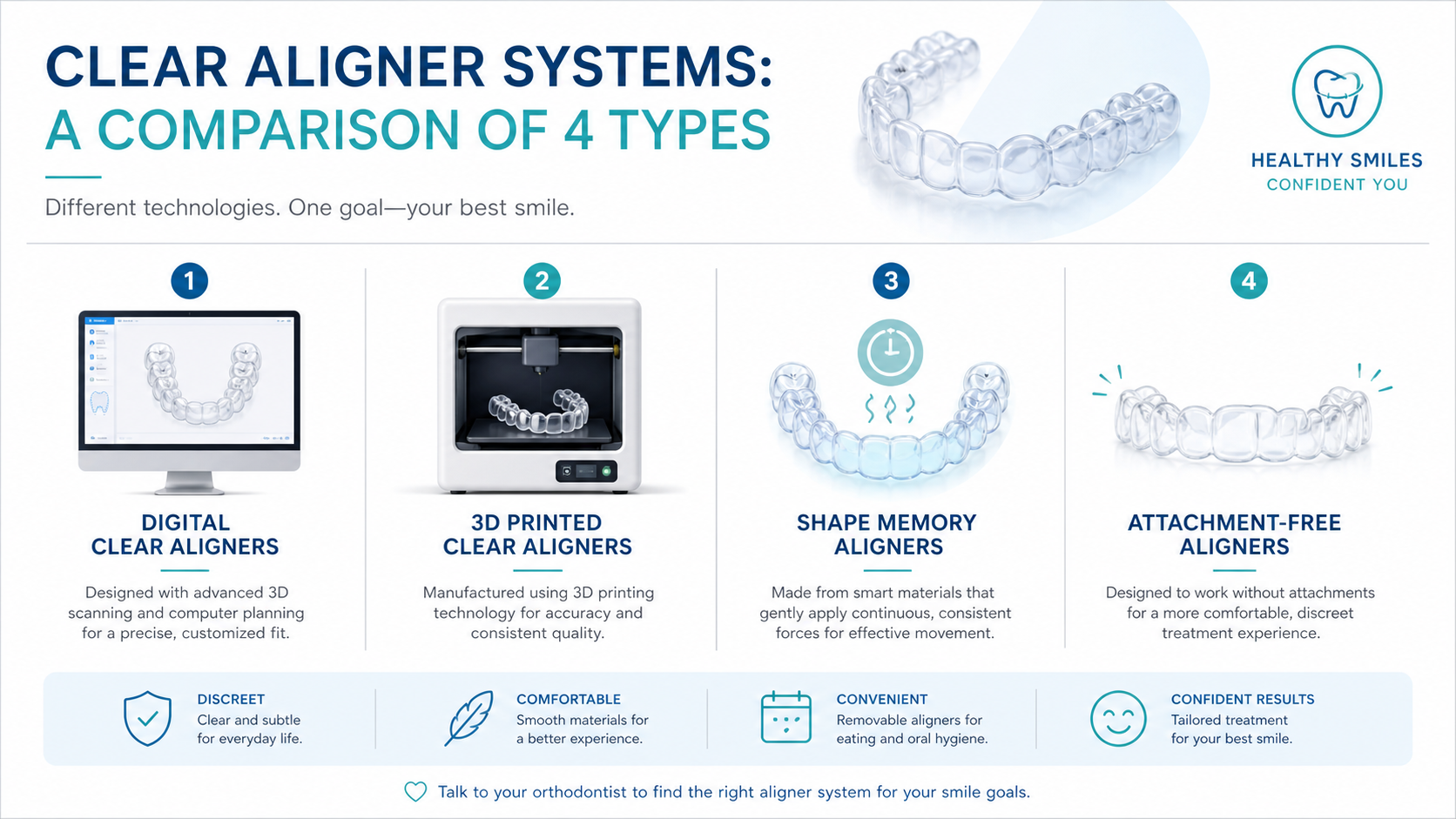
Not all aligner systems are identical, and that is where many patients get confused. The broad category includes traditional digital clear aligners, Invisalign and other branded systems, and newer manufacturing approaches that use 3D printing or shape memory materials.
Some systems are designed to be attachment free in certain cases, while others rely on small tooth-coloured attachments to improve control of specific movements. You may also see terms like same day clear aligners, direct printed aligners, or eco friendly clear aligners, which usually refer to differences in fabrication workflow, turnaround time, or material efficiency rather than a completely different category of treatment.
Common terms patients may see
| Term | What it usually means |
|---|---|
| Digital clear aligners | Aligners planned with digital scans and software |
| 3D printed clear aligners | Aligners made through additive manufacturing rather than traditional methods |
| Shape memory aligner | A tray made with materials that are designed to respond to heat and mouth temperature |
| Attachment free aligners | A system that may reduce or avoid attachments in selected cases |
| Same day clear aligners | A workflow focused on faster start times after digital scanning or in-office |
Read More: Graphy Direct Printed Aligners
Benefits and limits
For the right case, clear aligners can offer noticeable advantages. They are discreet, removable, and often easier to keep clean than fixed appliances. Many patients also appreciate being able to see a digital treatment plan before treatment starts.
The limits matter just as much. Clear aligners are not ideal for every bite problem, and they may be less suitable when teeth need complex rotation, vertical control, or major jaw-related correction. In those situations, braces, surgical orthodontics, MARPE, or a combined approach may be more appropriate, depending on the diagnosis.
When aligners may not be the best choice
Clear aligners can sound like the obvious answer, but they are not always the most efficient one. A patient who struggles to wear removable appliances consistently may not do well with aligners, even if the case looks simple on paper.
A different treatment may be worth discussing if the bite is especially complex, if growth modification is needed, or if the orthodontist needs more control over certain tooth movements. In those situations, an in-person exam is more useful than choosing a system based on appearance alone.
Cost and planning
Costs for clear aligner treatment vary widely across Ontario because they depend on case complexity, treatment length, and whether additional appliances or refinements are needed. Publicly available Canadian and Ontario estimates commonly place clear aligner treatment in a broad range, with many sources citing roughly the mid-thousands and some cases extending higher depending on the provider and complexity.
For York Orthodontics, the safest patient-facing language is to say that treatment is personalized and that a consultation is needed to determine the fee for a specific case. The practice also states that it offers free consultations and flexible payment plans, which can make the next step easier for families comparing options.
Who may be a candidate
Clear aligners are often considered for teens and adults who want a discreet option and can commit to wearing the trays as directed. They may also be appropriate for some younger patients, depending on the stage of dental development and the specific orthodontic goal.
That said, the age of the patient is only one factor. The bite, jaw growth, oral hygiene, and treatment cooperation all matter, and children should still generally have an orthodontic evaluation by age 7 even if treatment does not start right away.
What to ask at a consultation
A good consultation should help you understand whether aligners are a practical choice, not just a cosmetic one. Helpful questions include what movements the plan needs to achieve, whether attachments are likely, how often refinements are common for cases like yours, and what would make braces a better option instead.
You may also want to ask how the office handles digital records, how treatment progress is monitored, and what happens if an aligner is lost or damaged. Those details often matter more in everyday life than the marketing language used for the system itself.
If you are comparing clear aligner options for yourself or your child, a consultation can clarify whether aligners, braces, or another orthodontic approach is the better fit. York Orthodontics offers appointments in Thornhill and North York, and Dr. Nima Mir can assess which treatment approach matches the case
FAQs
They are usually described as uncomfortable rather than painful, especially when switching to a new tray. Pressure is expected, but the amount and duration of discomfort vary from person to person.
Not always. Some cases may move efficiently with aligners, but treatment speed depends on the movement required, patient wear time, and how complex the bite is
Yes, in many cases, but maturity and compliance matter. Teens who wear the trays as directed are more likely to keep treatment on track
Some newer systems and in-office workflows are designed to shorten the time between scan and start, but availability depends on the provider and the treatment plan.