

Invisalign for Older Adults- Adults Over 50
Considering Invisalign after 50? Your age alone does not determine whether clear aligners are suitable for you. Your orthodontist also needs to assess your teeth, gums, supporting bone and the changes needed to improve your smile and bite.
This guide explains the benefits of Invisalign for adults, the practical drawbacks and the dental health considerations that matter when starting treatment later in life.
Quick Answer: Can You Get Invisalign After 50?
Invisalign for adults can be an option after 50, including for suitable patients in their 60s and 70s. There is no fixed upper age cut-off for orthodontic treatment, but suitability depends on oral health and treatment needs. Active dental disease should be addressed before tooth movement begins. An in-person orthodontic assessment is needed to determine whether Invisalign, braces or another approach is appropriate.
How Old Is Too Old for Invisalign?
There is no fixed age at which an adult automatically becomes too old for Invisalign. Being over 50, 60 or 70 does not, by itself, rule out treatment. The important question is whether your teeth and their supporting tissues can tolerate the planned tooth movement.
The American Association of Orthodontists’ guidance on treatment at any age explains why age is rarely the deciding factor. However, this does not mean that every older adult is suitable for every orthodontic appliance.
Invisalign Age Requirements for Older Adults
For older adults, Invisalign age requirements are better understood as clinical suitability criteria rather than a numerical age limit. Your orthodontist will consider your oral health, existing dental work, bite and ability to follow the treatment plan.
There is no need to create separate treatment rules for your 50s, 60s and 70s. Each patient needs an individual assessment.
Does Invisalign Work for Adults?
Yes. Invisalign can move adult teeth and may be used to treat crowding, spacing and certain bite problems. Clear aligners apply controlled pressure through a sequence of trays designed for your treatment plan.
The deciding factor is whether aligners can deliver the tooth movements you need. Some cases are better managed with braces or a combination of approaches. Wearing aligners as prescribed and attending monitoring appointments are also important.
At York Orthodontics, Invisalign treatment is one of the available options. A consultation can help determine whether it fits your dental needs and daily routine.
Benefits of Invisalign for Adults
The benefits of Invisalign for adults include a discreet appearance and the ability to remove the trays for everyday dental care. For patients over 50, these practical features may make treatment easier to fit into an established routine.
- Less noticeable treatment: Clear trays are more discreet than metal brackets, although they are not completely invisible.
- Removable for meals: You remove the aligners before eating, rather than eating with a fixed appliance.
- Access for brushing and flossing: Removing the trays allows you to clean your teeth without working around brackets and wires.
- Alignment and bite goals: In suitable cases, treatment can address concerns that affect both appearance and function.
These advantages do not make Invisalign the best choice for everyone. The appropriate option depends on your diagnosis, preferences and ability to follow the prescribed routine.
What Should You Consider Before Orthodontics After 50?
Orthodontics after 50 requires an assessment of your existing dental health as well as your tooth alignment. Previous dental treatment and periodontal health can influence what is possible and how treatment should be planned.
Before starting, discuss:
- Gum health: Tell your orthodontist about bleeding gums, recession, loose teeth or previous periodontal treatment.
- Existing dental work: Fillings, restorations and missing teeth should be assessed as part of the plan.
- Untreated dental problems: Active decay, gum disease and unstable restorations should be addressed before treatment.
- Your treatment goals: Explain whether your priority is straighter front teeth, bite correction or preparation for other dental work.
A history of gum disease does not automatically establish whether you can or cannot have Invisalign. Your orthodontist may need to coordinate care with your dentist or periodontist, a specialist in gum health.
York Orthodontics’ adult orthodontic care includes different treatment options that can be discussed during your assessment.
Invisalign Pros and Cons for Older Adults
Undoubtedly, one of the most effective solutions to address mild to moderate dental problems is Invisalign. Here are the advantages and disadvantages of this method:
When comparing Invisalign pros and cons for older adults, consider how the appliance fits your daily life alongside its clinical suitability.
| Factor | Potential advantage | Practical limitation |
|---|---|---|
| Appearance | Clear trays are discreet. | Treatment is not completely invisible. |
| Meals | Aligners are removed before eating. | You need a consistent routine for putting them back in. |
| Oral hygiene | Teeth are accessible for brushing and flossing. | Both your teeth and trays require regular cleaning. |
| Wear time | A removable appliance offers flexibility. | Removing it too often can interfere with treatment. |
| Treatment suitability | Aligners can address several alignment and bite concerns. | Some movements are treated more predictably with braces. |
The best option is the one that can address your orthodontic needs and that you can use consistently.
Pros of Invisalign for adults over 50
Clear and Nearly Invisible– one of the greatest advantages of Invisalign for adults is its transparency, making it difficult for others to notice. In fact, Invisalign uses clear, transparent trays that fit snugly over the teeth, allowing adults to feel more confident in public or at work.
Easy to Remove– Another benefit of Invisalign for adults over 50 is its removable feature. It means you no longer have to distance yourself away from the foods you like or stick to certain diets that suit your braces. Moreover, you can take it off for special occasions, like when you have an important meeting. But please notice this delicate point if you want a beautiful result, you’ll need to commit to wearing them for a specific period of time- ideally 20 to 22 hours per day.
Incredible Effectiveness– when it comes to Invisalign for adults over 50, the common question that is frequently asked us is: “Is Invisalign an effective solution for my problem?” The answer is a big yes. Invisalign can effectively treat mild to moderate dental issues, regardless of your age. It means that if you have a slight overbite, some crooked teeth, or other dental problems, Invisalign might be a good option.
No Age Limit– The other common question is: “How old is considered too old for Invisalign for adults?” to answer this question, if your bone density is acceptable, there is no upper age limit to undergo the Invisalign process, meaning Invisalign at 70 years old can be the effective treatment as Invisalign for early age. In other words, anyone between the age of 8 to 88, or even older, can benefit from the advantages of Invisalign.
The cons of Invisalign for adults over 50
Here are the drawbacks of Invisalign for adults:
Necessitate a substantial degree of commitment
If you want a beautiful result, you must commit to your treatment and wear your aligners for 20-22 hours per day. Our busy life may cause us to forget to wear aligners, but not wearing trays for recommended time means slowing down the treatment process.
Therefore, the ability to remove the aligners is a double-edged sword, while it provides you with some level of flexibility in your diet, it can also extend the duration of your treatment.
In addition, you have to take off your trays when eating or drinking (except water), because if you don’t, you’ll certainly damage your trays, meaning additional cost.

Requires additional oral hygiene
Another disadvantage of Invisalign for adults over 50 is to commit additional oral hygiene over what you’re normally expected. It means being extra mindful of your oral health and Invisalign aligners.
As mentioned above, after each meal, you’ll need to take off your Invisalign. Before putting the trays back in, you’ll need to brush and floss your teeth carefully. Immediately putting the trays back in may cause increased rapid tooth decay or other gum disease due to trapping foods or other debris under the trays.
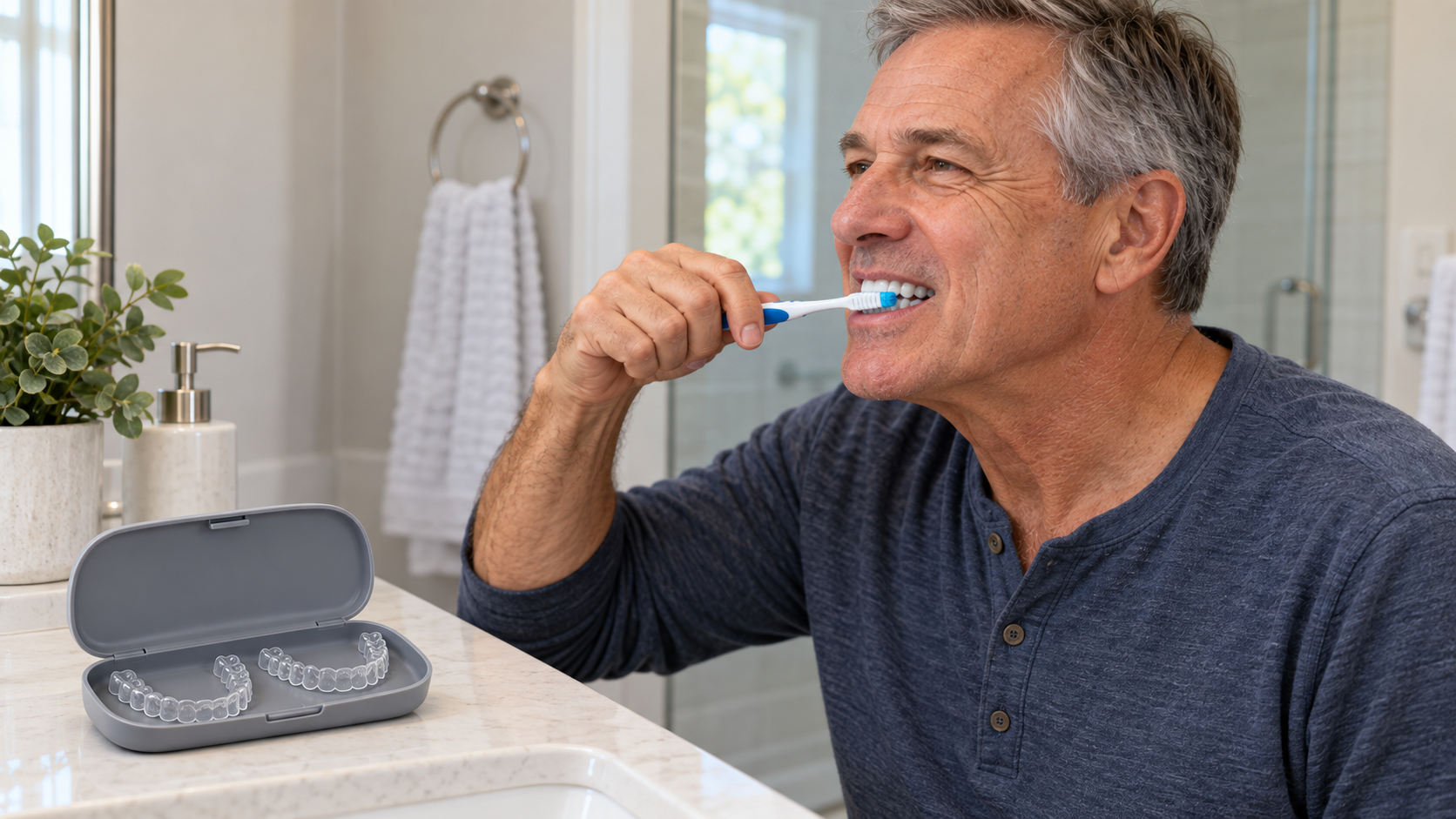
Also, you must carefully care of your Invisalign aligners. To do so, follow these steps:
- Rinse your trays with water
- Gently brush your Invisalign trays using a toothbrush and then rinse off your trays again
Other recommendations:
- Soak your trays in a denture cleaner for a short time
- Don’t forget to clean your trays every day.
When Might Invisalign Not Be the Best Option?
Invisalign may not be the best option when the required tooth movements are more predictable with braces, or when a patient cannot consistently follow the wear schedule. Active dental disease may also mean that orthodontic treatment needs to be postponed.
Complex problems should not automatically be labelled “untreatable with Invisalign”. Depending on the diagnosis, your orthodontist may recommend aligners, braces, additional appliances or a combined approach.
Ask your orthodontist to explain why the recommended option suits your case and what limitations you should expect.
Daily Care During Invisalign Treatment
Remove your aligners for meals and follow your orthodontist’s instructions for cleaning your teeth and trays. Keep attending dental check-ups as well as orthodontic monitoring appointments.
Before starting, ask for a clear daily wear schedule and instructions for changing trays. If an aligner no longer fits properly, contact your orthodontic team rather than changing the plan yourself.
Will You Need Retainers After Invisalign?
Yes. Retainers are part of maintaining alignment after Invisalign, including when treatment begins after 50. They help limit the tendency of teeth to shift after active treatment ends.
The American Association of Orthodontists’ retainer guidance explains the importance of ongoing retention. Follow your orthodontist’s instructions for wear, cleaning and replacement.
FAQs
No. These ages do not automatically exclude you from treatment. Your orthodontist needs to assess your oral health and the tooth movements required before recommending Invisalign.
Older age does not mean Invisalign will work faster. Treatment duration depends on your diagnosis, biological response and treatment plan, so an individual estimate is more useful than an age-based prediction.
Possibly, but previous gum disease requires careful assessment. Active disease should be addressed first, and your orthodontist may coordinate with your dentist or periodontist before recommending tooth movement.
Neither option is universally better. Invisalign offers removability, while braces may be more appropriate for some movements or for patients who would find a removable appliance difficult to use consistently.
Ask for a personalised estimate and check what it includes, such as monitoring, additional aligners and retainers. York Orthodontics’ Invisalign cost guide explains factors that can affect the fee.
Considering Invisalign After 50?
If you are considering Invisalign after 50, an assessment can help you understand which changes are achievable and which treatment options suit your dental health.
Book a consultation with York Orthodontics to discuss your alignment concerns, existing dental work and questions about treatment.
Call: 289-588-8747