

Mouth Breathing and Orthodontics: Causes, Signs & Treatment
If your child often breathes through their mouth, it is reasonable to wonder whether their teeth or jaws are involved. Mouth breathing orthodontics starts with assessing the bite and jaw development, while making sure possible medical causes receive attention too.
An orthodontist can identify a dental or jaw problem that needs care. Whether treatment will help breathing depends on why mouth breathing is happening in the first place.
Quick Answer
Persistent mouth breathing can reflect nasal obstruction, sleep-related breathing concerns or an ongoing oral habit. Orthodontics may be appropriate when an examination confirms a narrow upper jaw, crossbite or another dental or skeletal problem. Braces and expanders do not treat every cause of mouth breathing, and an open-mouth posture alone does not diagnose sleep apnea. A useful assessment separates medical breathing needs from orthodontic treatment needs, then coordinates care when both are present.
What causes persistent mouth breathing?
Difficulty breathing through the nose is an important cause to investigate. Allergies, ongoing congestion, enlarged adenoids or tonsils, and structural nasal problems may contribute. Sometimes an open-mouth resting habit continues after a previous obstruction improves.
Cleveland Clinic’s mouth breathing guidance explains that treatment addresses the condition interfering with nasal breathing. This is why choosing an orthodontic appliance before checking the cause can miss the problem that needs attention.
A blocked nose during a cold is different from a recurring pattern while otherwise well. At an appointment, explain whether the concern happens during the day, during sleep or both, and whether it follows allergy seasons or illness.
The broader relationship between breathing, sleep and jaw development is covered in York Orthodontics’ airway orthodontics guide. Here, the focus is on what persistent mouth breathing means for assessment and treatment decisions.
What signs should parents and adults mention?
Mention frequent mouth breathing along with any nasal, sleep or dental concerns. No single sign confirms a diagnosis, but the pattern helps healthcare professionals decide what to investigate.
Useful observations include:
- Frequently resting or sleeping with the mouth open.
- A dry mouth on waking or recurring bad breath.
- Persistent stuffiness or difficulty breathing comfortably through the nose.
- Regular snoring, restless sleep or observed pauses in breathing.
- Difficulty bringing the lips together comfortably.
- A noticeable bite concern or crowded developing teeth.
For sleep concerns, the American Academy of Pediatric Dentistry’s policy on obstructive sleep apnea supports screening and medical referral when indicated. Obstructive sleep apnea, or OSA, involves repeated partial or complete upper-airway obstruction during sleep. Mouth breathing can occur with OSA, but it does not establish that a child has it.
If you observe breathing pauses or recurrent gasping, arrange medical assessment rather than relying on a routine dental appointment alone. Keep the description factual: what you saw, how often it happens and whether there are other symptoms.

What are the effects of mouth breathing on teeth and jaws?
Persistent mouth breathing has been associated with differences in dental arches, bite relationships and facial growth in some children. Association does not mean that mouth breathing alone caused a particular child’s dental problem.
A retrospective study of mouth breathing and dental development compared children already receiving orthodontic treatment. The mouth-breathing group showed narrower arches, more posterior crossbites and differences in jaw-growth measurements. Because the study was retrospective and involved selected orthodontic patients, it cannot prove cause and effect or predict what will happen to every child.
During an examination, the orthodontist may look for:
- A narrow upper dental arch: limited width across the upper teeth and supporting jaw.
- A posterior crossbite: some upper back teeth bite inside the lower back teeth.
- Increased overjet: the upper front teeth sit farther ahead of the lower front teeth.
- Lip-closure difficulty: the lips do not meet comfortably at rest.
These findings can also occur in people who breathe through their nose. They require an individual assessment, rather than a diagnosis based on a photograph or facial appearance.
Mouth breathing can also accompany oral dryness. Mention dryness to your dentist as well as to the clinician investigating breathing; correcting a bite and managing oral symptoms are separate parts of care.
When can mouth breathing orthodontics help?
Orthodontics can help address a confirmed dental or skeletal problem. The key question is whether the patient has a valid orthodontic reason for treatment, rather than simply whether they breathe through their mouth.
A narrow upper jaw or crossbite
A palatal expander is an appliance used to widen a constricted upper jaw in suitable patients. The orthodontist assesses jaw width, bite, development and treatment goals before deciding whether expansion is appropriate.
Expansion should not be presented as a universal mouth breathing treatment. The 2024 American Thoracic Society guideline conditionally supports orthodontic or dentofacial orthopaedic treatment for selected children with specific craniofacial features and persistent OSA after tonsil and adenoid surgery. The evidence was rated very low certainty. That recommendation concerns a defined medical population; it does not justify expanding every mouth-breathing child.
Tooth alignment or another bite problem
Braces or other orthodontic treatment may be recommended to correct tooth position or the bite. Those goals should be stated clearly. Straighter teeth do not, by themselves, demonstrate that nasal breathing or sleep has improved.
Before agreeing to treatment, ask: “Which dental problem are we treating, and how will we judge success?” If breathing improvement is also a goal, ask who will evaluate that separately.
What does mouth breathing treatment involve?
Treatment depends on the cause, and more than one professional may be involved. Medical and orthodontic care can happen alongside each other when there are separate reasons for both.
| Finding or concern | Appropriate next step | Important boundary |
|---|---|---|
| Ongoing nasal blockage or allergy symptoms | Family physician, paediatrician or ENT assessment as appropriate | Orthodontics cannot remove a nasal obstruction or treat allergies. |
| Snoring with observed breathing pauses or other sleep concerns | Medical assessment; sleep evaluation when indicated | Mouth posture and bite appearance cannot diagnose OSA. |
| Narrow upper jaw, crossbite or a tooth-position problem | In-person orthodontic examination | Treatment must have a clear dental or skeletal indication. |
| Persistent oral posture concerns after medical assessment | Discuss whether functional assessment or supervised therapy is appropriate | Exercises should not replace investigation of breathing difficulty. |
ENT means ear, nose and throat specialist. Depending on findings, medical care may involve managing inflammation or considering a procedure for a confirmed obstruction. An orthodontist determines the dental part of the plan.
Myofunctional therapy involves guided exercises for oral muscle function and posture. It may be discussed as an adjunct in selected cases, with realistic goals and professional supervision. It should not be assumed necessary for every patient or used to bypass medical assessment.
What should you do before an assessment?
Bring observations that help distinguish a temporary episode from a persistent pattern. A short written summary is often easier to discuss than trying to remember everything during the appointment.
Include:
- When you first noticed the concern and whether it occurs while otherwise well.
- Whether it happens during sleep, while awake or both.
- Any nasal blockage, allergies, snoring or observed breathing pauses.
- Previous medical advice, treatments and whether symptoms changed.
- Your main dental concern and what you hope an assessment will clarify.
You do not need to decide whether the problem is “medical” or “orthodontic” beforehand. The purpose of assessment is to identify which questions each professional can answer.
Useful treatment-planning questions include: “Why is this appliance recommended?”, “What are its burdens and limitations?”, and “What would monitoring involve if treatment is not needed now?” Ask how dental outcomes and any breathing concerns will be followed separately.
What can York Orthodontics assess?
York Orthodontics assesses dental and jaw-development concerns in children and provides individualized orthodontic care. An appointment can help clarify whether a bite or jaw problem needs treatment, monitoring or further investigation.
For children, early orthodontic treatment is considered according to the findings and stage of development. An early consultation does not mean an appliance is automatically needed. Tell the team about breathing concerns even if your main reason for booking is crowding or a crossbite.
An in-person examination is necessary for individual orthodontic recommendations. If medical breathing concerns are present, dental assessment complements the appropriate medical evaluation.
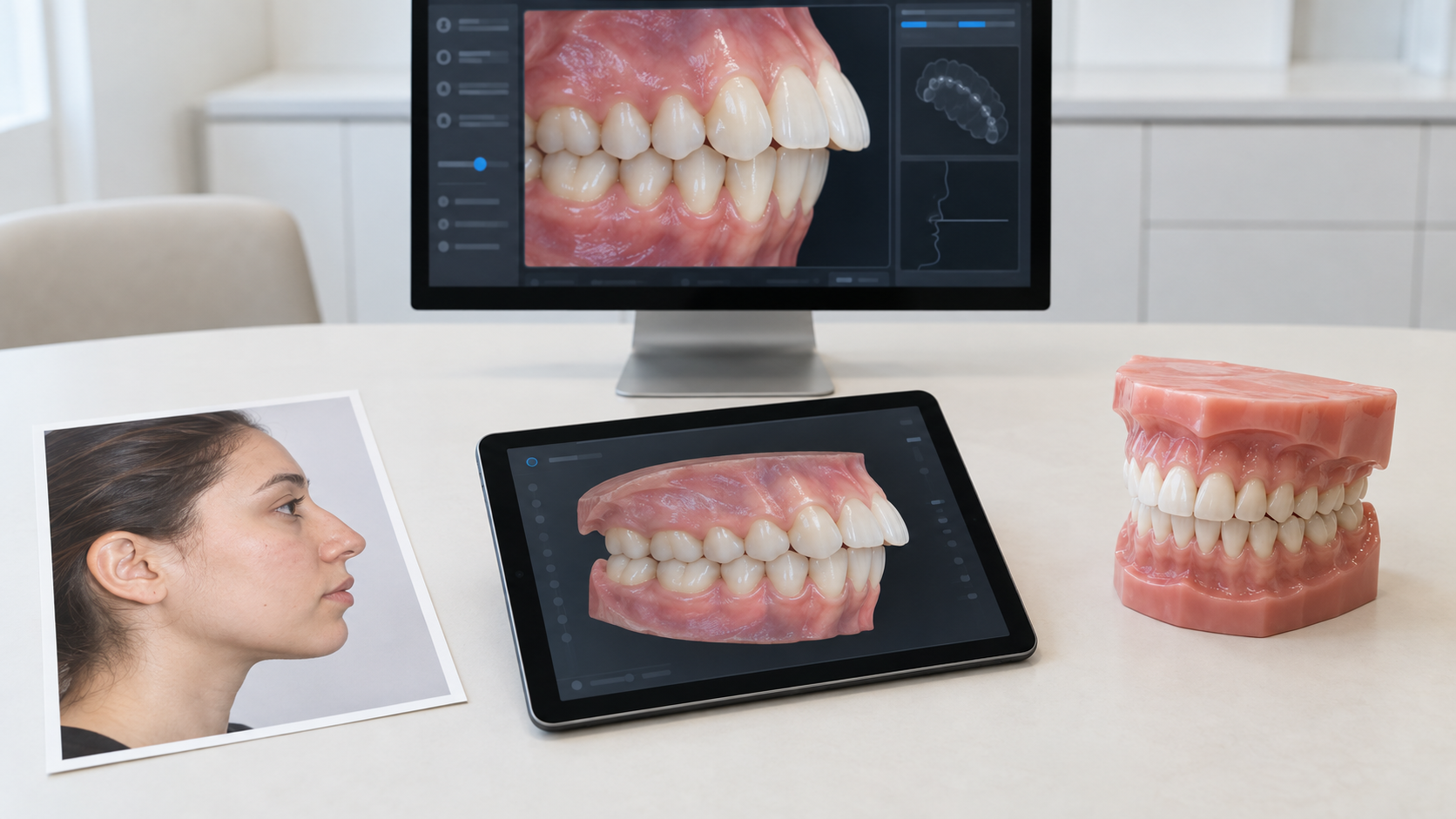
Persistent mouth breathing deserves an explanation, and the most useful plan starts with its cause. If you are concerned about your child’s bite or jaw development alongside mouth breathing, request an assessment with York Orthodontics. Bring your observations so you can discuss whether orthodontic care has a role and which concerns need medical attention.
FAQs
Persistent nasal blockage or sleep symptoms should be discussed with a medical professional. An orthodontist can assess a related bite or jaw concern; if both are present, the assessments can proceed alongside one another.
Braces move teeth and correct appropriate bite problems. They are not a general treatment for nasal obstruction, so a breathing concern still needs assessment even when braces are recommended for the teeth.
No. An expander requires a clear orthodontic indication and individual assessment. Mouth breathing alone does not show that the upper jaw needs widening.
The phrase describes a treatment focus rather than one standard appliance or guaranteed outcome. Ask which diagnosed dental problem is being addressed, what medical assessment is needed and how any breathing outcome will be evaluated.
Adults can seek an orthodontic assessment for dental or jaw concerns, but persistent mouth breathing also needs its cause investigated. The plan should distinguish bite correction from treatment of nasal or sleep-related problems.