

How Is a LightForce Treatment Plan Created for Your Smile?
Two patients may both have crowded teeth, but that does not mean their teeth should move in exactly the same way.
One patient may have rotated front teeth. Another may need bite correction. Even the shape and surface of their teeth can be different. So why should both patients begin treatment with identical brackets?
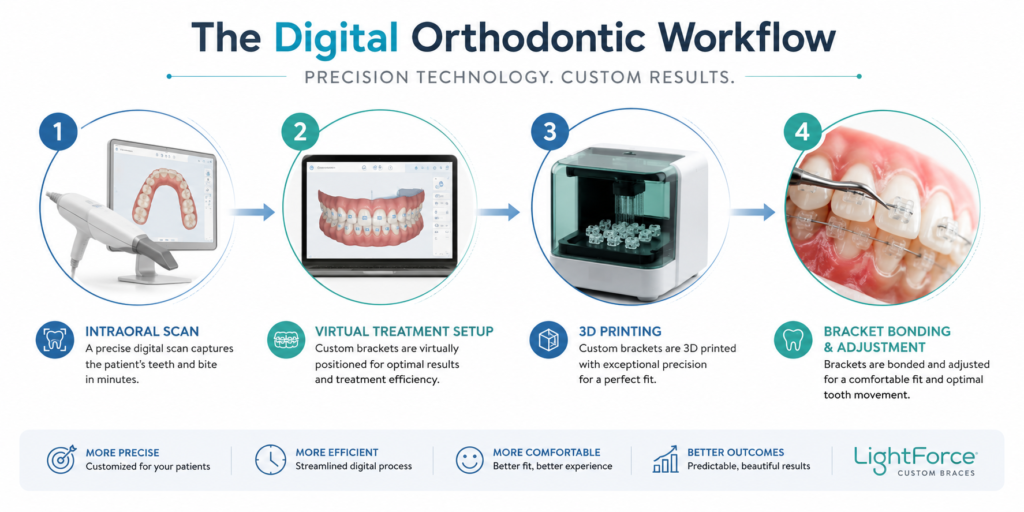
A LightForce treatment plan takes a more personalized approach. Your orthodontist first creates a digital model of your teeth, plans the desired tooth movements, and then uses that plan to order custom brackets designed for your smile. Instead of adapting a standard bracket system throughout treatment, LightForce allows more of the orthodontist’s plan to be built into the braces from the beginning.
This article explains how that digital plan is created, what your orthodontist controls, and what patients should realistically expect.
A LightForce treatment plan is a personalised braces plan that uses a digital scan and 3D printing to create brackets shaped and positioned specifically for your teeth; the goal is more precise force delivery and fewer wire bends compared with off‑the‑shelf brackets. Whether LightForce is the right option depends on your bite problem, oral health, growth stage, and treatment goals; an in‑person exam is required to know for certain. This article explains how the LightForce digital workflow works, who may benefit, realistic expectations and limitations, and the questions to ask at your consultation with York Orthodontics
Why LightForce is different?
Custom brackets: LightForce produces individually designed brackets for each tooth rather than using identical prefabricated brackets, aiming to match bracket shape and prescription to your anatomy.
Digital-first workflow: The system typically starts with a digital intraoral scan (commonly an iTero scan) and a virtual tooth‑movement plan; that plan informs 3D printing of the brackets.
Intended outcome: The personalised brackets are intended to reduce manual wire bending and allow the orthodontist to deliver prescribed tooth movements more directly.
What the LightForce digital orthodontics workflow looks like
Digital scan — The orthodontist obtains a detailed intraoral scan (for example, an iTero scan) to create an accurate 3D model of your teeth.
Virtual treatment plan — A virtual set‑up shows the proposed final tooth positions; this lets the clinician evaluate and refine the plan before any brackets are made.
3D printing and manufacturing — Brackets are 3D‑printed to match the virtual prescription and are bonded to your teeth in the clinic.
Active treatment and monitoring — You’ll have scheduled visits for wire changes and monitoring; the custom brackets are designed to work with standard wires but aim to reduce in‑office adjustments.
Who may be a suitable candidate
Patients with moderate alignment or bite issues who want braces rather than clear aligners may benefit from a custom-bracket approach.
Teens and adults with stable oral health and good hygiene habits are typical candidates for bracket-based treatment.
Patients needing precise control of individual tooth rotations or torque may find custom brackets helpful; candidacy still depends on specific diagnosis and complexity.
When LightForce may not be the right choice?
Very simple cases that are well addressed by clear aligners or conventional braces may not need custom brackets.
Complex surgical or growth‑modification cases could require additional appliances or approaches beyond what bracket design alone controls; treatment planning will identify these needs.
Patients who prefer removable, nearly invisible treatment may still be better served by clear aligners like Invisalign, depending on case suitability.
Practical benefits and realistic limitations
Benefits: personalised bracket fit, potential for fewer manual wire adjustments, and an upfront virtual prediction of tooth movement.
Limitations: custom brackets do not guarantee shorter treatment time or fewer appointments in every case; outcomes depend on biology, compliance, and case complexity.
Cost and logistics: custom manufacturing can affect cost and lead time; a consultation with York Orthodontics will clarify pricing and timing for your specific case.
Questions to ask at your consultation:
Will LightForce address the specific bite or alignment issues I have?
How will the virtual treatment plan be shared with me, and can I see the predicted final result?
How many appointments and wire adjustments should I expect, compared with conventional braces or aligners?
Are there additional costs, manufacturing lead times, or warranty considerations for custom brackets?
How does this option compare with Invisalign, ceramic braces, or LightForce alternatives for my exact diagnosis?
Comparison: LightForce vs conventional brackets vs clear aligners (brief)
Precision: LightForce aims for higher bracket-by-bracket precision than conventional brackets, because each bracket is custom‑designed.
Visibility: LightForce brackets are still fixed braces (metal or tooth‑colored options exist with other systems), so they are more visible than clear aligners.
Predictability: LightForce’s virtual set‑up provides a clear plan before treatment begins, similar to digital workflows used for aligners; biological response and compliance still affect final results.
Preparing for a LightForce consultation at York Orthodontics
Bring recent dental X‑rays if available and a list of dental history and any jaw or bite concerns.
Expect an intraoral digital scan and discussion of treatment goals, timelines, payment options, and follow‑up.
York Orthodontics offers free consultations and personalised treatment plans; they can explain whether LightForce or another option better suits your needs.
When to see a specialist sooner
Seek an assessment promptly if you or your child have tooth bite problems that cause pain, difficulty chewing, or rapid changes in tooth position; otherwise, routine consultations can be scheduled through York Orthodontics’ offices in Thornhill or North York.
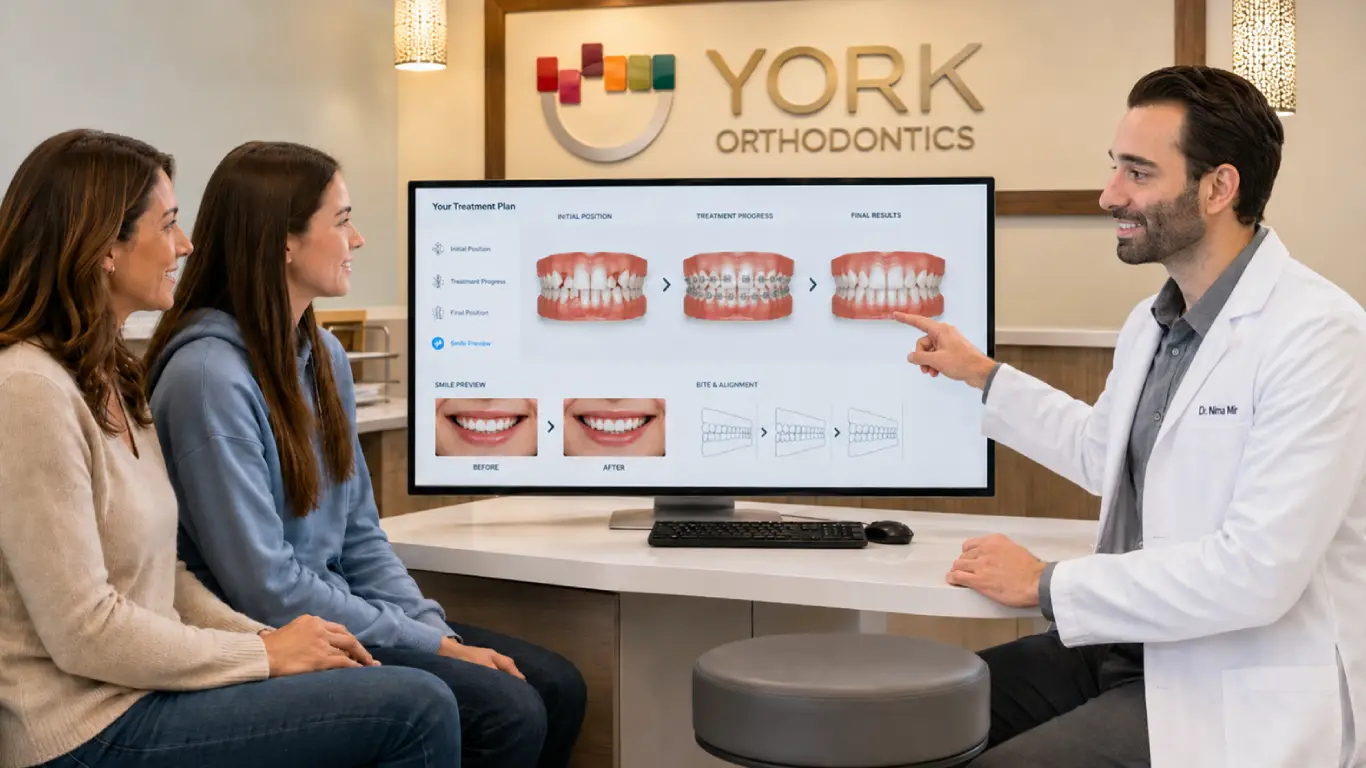
If you want a personal assessment of whether a LightForce treatment plan suits your case, schedule a free consultation with York Orthodontics at their Thornhill or North York office; phone 289‑588‑8747, or visit their LightForce information page for details on the technology and process.
FAQs
Treatment length varies by diagnosis and complexity; a virtual plan helps estimate duration but an in‑person assessment is required for an accurate timeline.
Discomfort levels are similar to other bracket systems; custom brackets do not eliminate ordinary soreness associated with braces adjustments.
Custom brackets can be part of comprehensive plans that include surgery or skeletal expansion techniques, but the full treatment strategy is case‑dependent and determined during planning.
LightForce is designed to be more customized and digitally planned. The brackets are generated from the treatment plan, which may help create a more precise starting setup.