

Signs Your Child May Have an Airway Problem: A Parent’s Guide to Signs of Airway Problems in Children
A child who snores, sleeps with their mouth open or wakes repeatedly may need a closer look at their breathing during sleep. These observations are worth discussing with a healthcare professional, especially when they occur together or continue beyond a passing illness.
Quick Answer
Common signs of airway problems in children include frequent snoring, ongoing mouth breathing, pauses or gasping during sleep, and restless nights. Daytime tiredness, irritability or trouble concentrating may accompany disturbed sleep. These signs do not establish a diagnosis, and a narrow palate alone does not prove an airway disorder. Start with your child’s family physician or paediatrician for breathing concerns; an orthodontic examination can assess related bite and jaw-development findings.
What do parents mean by an “airway problem”?
An airway problem is a broad description, rather than one specific diagnosis. Here, it refers mainly to concerns about airflow through the nose and throat, particularly during sleep.
Sleep-disordered breathing describes a range of breathing disturbances during sleep. Obstructive sleep apnea, or OSA, involves repeated narrowing or blockage of the upper airway. It requires medical assessment rather than identification from a child’s appearance.
For broader context, York Orthodontics’ guide to airway orthodontics explains how breathing history, jaw development and medical care can fit together.
What are the signs of airway problems in children?
Look for recurring patterns rather than trying to diagnose a condition from one night. The American Thoracic Society’s parent guidance identifies frequent snoring, mouth breathing, gasping, breathing pauses and restless sleep as clues that warrant attention.
1. Snoring that happens regularly
Child snoring deserves discussion when it happens repeatedly. The American Thoracic Society identifies snoring at least three nights a week as one clue to possible OSA; this is an observation to report, not a diagnostic cut-off.
Notice whether the snoring occurs during illness only or also when your child otherwise seems well. Report any accompanying gasps or pauses rather than describing the noise alone.
2. Mouth breathing during the day or night
Persistent child mouth breathing is worth mentioning to your child’s healthcare provider. An open mouth may be easy to notice while your child watches television, reads or sleeps.
Write down when you see it and whether nasal stuffiness seems to be present. Avoid assuming that it is simply a habit or that tooth alignment explains it. An examination is more useful than repeatedly reminding your child to close their mouth.
3. Breathing pauses, gasping or choking sounds
Repeated pauses followed by a snort or gasp need prompt medical attention. Tell the clinician what you observed, including whether your child appeared to struggle to breathe.
Do not wait to gather a perfect recording before seeking advice. If your child is currently having severe breathing difficulty or develops blue or grey colouring, seek emergency help immediately.
4. Restless sleep or unusual positions
Frequent tossing, repeated waking or sleeping with the head tipped back can be relevant when they occur with noisy or difficult breathing. Restless sleep in children has several possible explanations, so movement alone does not identify the cause.
Describe what you actually see: for example, repeated waking with snoring is more informative than saying your child is “a bad sleeper”. The aim is to help the clinician understand the pattern.
5. Changes you notice the next day
Poor sleep may be accompanied by fatigue, morning headaches, irritability, increased activity or difficulty paying attention. These signs are not specific to a breathing disorder and should not be used to explain every school or behaviour concern.
MedlinePlus’s overview of paediatric sleep apnea describes both nighttime and daytime symptoms. Bring concerns about sleep and daytime functioning to the same appointment so the clinician can consider them together.
Does a narrow palate mean my child has sleep apnea?
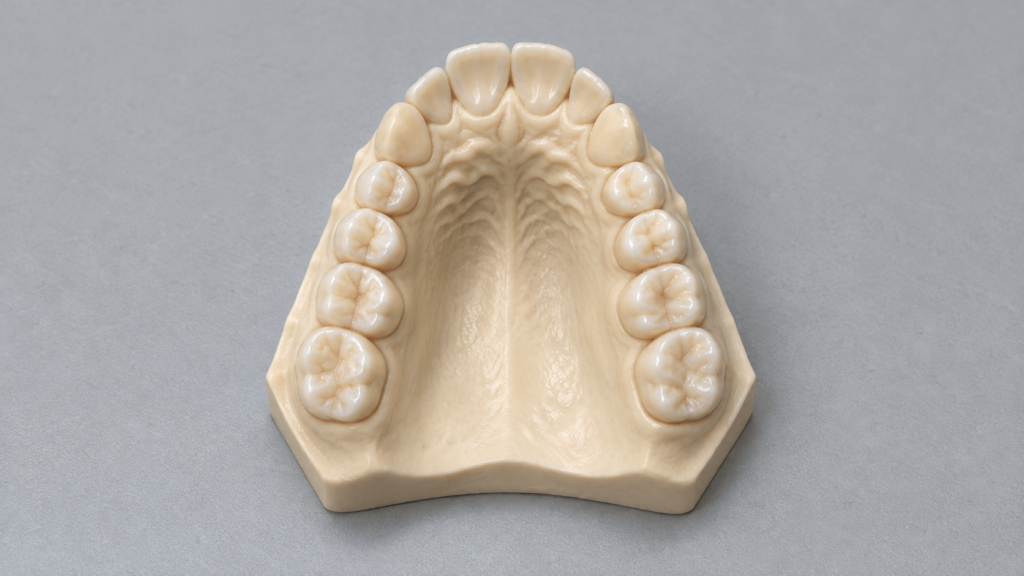
No. A narrow palate is an orthodontic finding, not a sleep-apnea diagnosis. The palate is the roof of the mouth; jaw and palate shape may be relevant to an assessment, but they do not tell a clinician what happens to breathing throughout the night.
An orthodontist can examine arch width, tooth crowding and the bite. Parents do not need to judge palate width from photographs or compare their child’s smile with pictures online.
York Orthodontics’ information about a palatal expander explains an appliance used to widen the upper jaw. Whether a child needs expansion is a separate clinical question from whether the child has a sleep-related breathing disorder.
Who should assess my child first?
For snoring, gasping or ongoing breathing concerns, contact your child’s family physician or paediatrician. Depending on the findings, the next step may involve an ear, nose and throat specialist or a sleep specialist.
A medical assessment may lead to an overnight sleep study, called polysomnography. The American Academy of Pediatrics’ parent information explains that this test records sleep and breathing information to help establish the diagnosis.
An orthodontic assessment addresses a different question: is there a bite or jaw-development issue requiring attention? York Orthodontics provides early orthodontic treatment for children, but an assessment does not automatically mean treatment should start.
What should I record before an appointment?
A short, factual record can make the conversation easier. You do not need specialist equipment or a home diagnosis.
Consider noting:
- Frequency: which nights you noticed snoring or disturbed sleep.
- Breathing: mouth opening, gasping, pauses or visible effort.
- Context: whether your child had a cold or reported a blocked nose.
- Sleep disruption: awakenings or unusual positions you observed.
- Daytime concerns: tiredness, headaches or changes reported by your child or teacher.
- History: previous assessments, treatment and whether concerns continued afterwards.
A brief recording may help show a clinician what you mean, if it is safe and practical to obtain one. Keep it private and share it directly with the healthcare team. A quiet recording cannot rule out a problem, and documenting symptoms should never delay care.
When should parents act urgently?
Seek prompt medical advice for repeated breathing pauses, gasping or concerning breathing effort during sleep. Regular snoring with other symptoms also deserves assessment rather than waiting for an orthodontic appointment.
Call 911 for an immediate emergency, including blue or grey colouring or severe difficulty breathing. Do not wait to time a pause or complete an observation diary when a child appears acutely unwell.
For less urgent concerns, explain the symptoms when booking so the medical team can advise on timing. This article is educational guidance; individual recommendations require professional assessment.
Can orthodontic treatment solve the breathing problem?
Sometimes orthodontic care has a role, but it should address a confirmed clinical need within a coordinated plan. It should not be offered as a guaranteed answer to snoring or mouth breathing.
The 2024 American Thoracic Society clinical guideline conditionally supports considering orthodontic or dentofacial orthopaedic treatment for selected children with specific craniofacial features and OSA that persists after tonsil and adenoid surgery. The certainty of evidence is very low, and this recommendation does not apply to every child who snores.
Useful questions include: What problem would treatment address? Is there a separate medical diagnosis? Who will check whether sleep and breathing have improved?
Persistent symptoms deserve follow-up even after a treatment has been completed. Do not assume that straighter teeth or a wider arch establish that a sleep disorder has resolved.
A practical next step for your child
Recurring breathing and sleep symptoms deserve a clear explanation. Contact your child’s physician about those symptoms, and contact York Orthodontics if you also have questions about palate width, crowding or jaw development. An in-person examination can clarify whether orthodontic monitoring or treatment is appropriate alongside medical care
FAQs
Yes. Some children show irritability, increased activity or attention difficulties instead of obvious sleepiness. Discuss the whole sleep and daytime pattern rather than relying on one symptom.
No. Mouth breathing does not identify its cause. A clinician should assess breathing concerns, while an orthodontist can examine whether jaw width or the bite also needs attention.
No. A recording can illustrate what a parent observed, but it cannot confirm or exclude a sleep disorder. Your child’s medical team decides which assessment or testing is appropriate.
No. Snoring alone is not an indication for expansion. An in-person orthodontic examination is needed to establish whether the child has a jaw-width or bite problem that warrants treatment.
Tell your child’s medical team. Sleep apnea can persist after surgery, and further assessment may be needed; additional treatment should depend on the findings.
Bring your observation notes, relevant medical history and any available reports from previous assessments. Ask which findings concern the bite and which symptoms need medical investigation.